Choosing the Right Resin Topcoat: High Build Epoxy vs PVA Flake
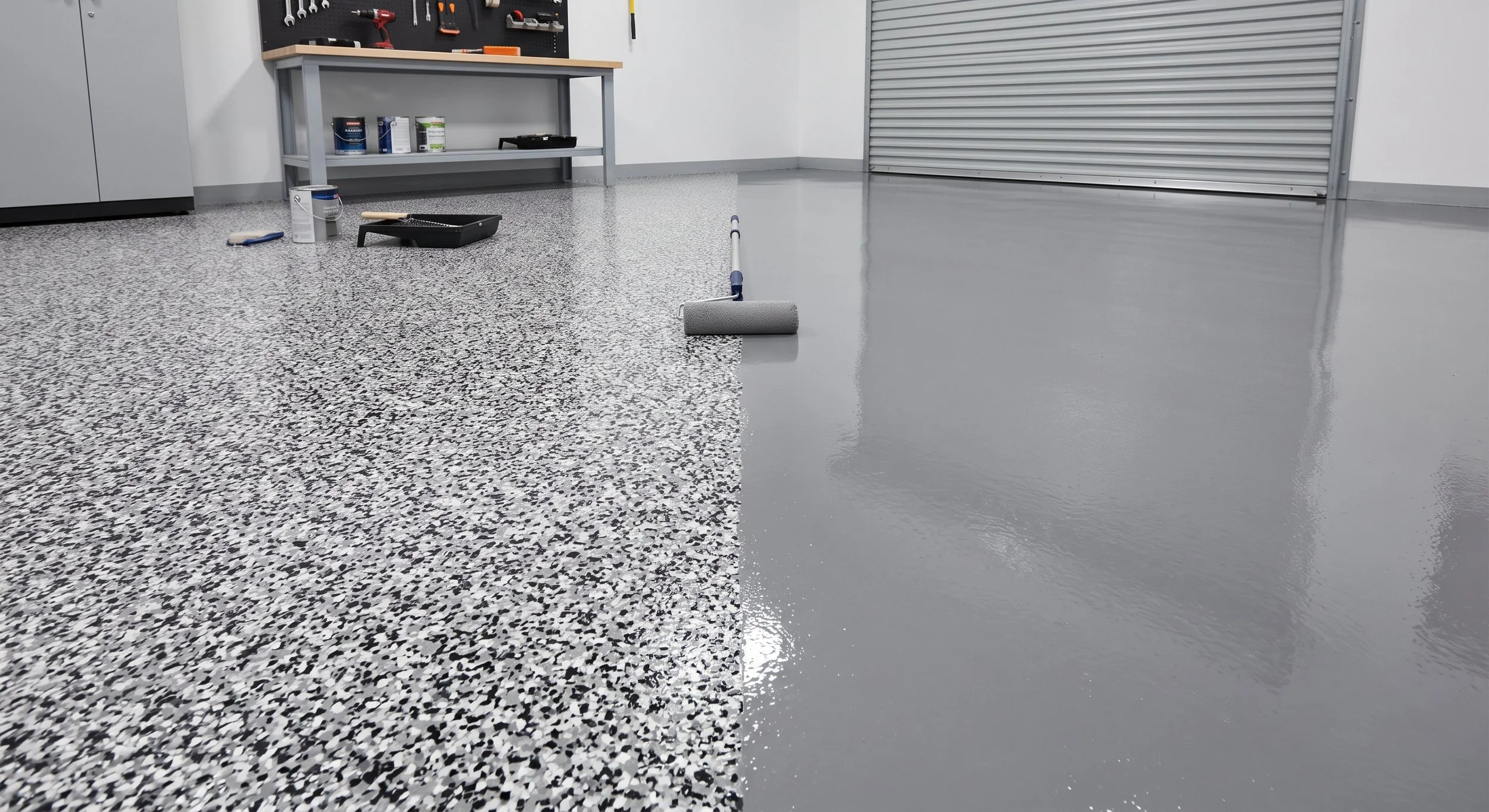
Now that your concrete slab is fully repaired, ground, and sealed with a moisture barrier, it is time for the final step: choosing and applying the topcoat.
Selecting the right surface finish depends on how your space will be used, your budget, and the aesthetic you want to achieve. The two most popular specifications for commercial units, workshops, and garages are High Build (HB) Epoxy and PVA Decorative Flake systems.
In this guide, we compare both finishes so you can pick the exact right topcoat system for your property.
Option 1: High Build (HB) Epoxy Coatings
High Build Epoxy is a 100% solids, heavy-duty resin coating applied in two thick coats. Unlike standard floor paints that evaporate as they dry, HB Epoxy chemically cures to form a thick, solid protective sheet over your prepped concrete.
Best For:
Commercial warehouses and manufacturing units with heavy forklift traffic.
Automotive workshops exposed to oil, brake fluid, and battery acid.
Budget-conscious commercial projects needing a sleek, industrial look.
Key Advantages:
Chemical Resistance: Highly resistant to aggressive chemicals, petrol, hydraulic oils, and solvents.
Easy Maintenance: Creates a smooth, seamless finish that is effortless to sweep, mop, and pressure-wash.
Cost Efficiency: Offers a lower material and labor cost per square meter compared to multi-layer decorative systems.
Option 2: PVA Decorative Flake Systems
A PVA Flake floor builds upon a resin base coat by fully broadcasting vinyl chips (flakes) across the wet surface until saturated. Once cured, loose flakes are scraped flat and sealed with a high-durability, clear polyaspartic or polyurethane topcoat.
Best For:
Domestic garage conversions, showrooms, and retail stores.
High-traffic commercial areas where slip resistance is critical.
Spaces requiring a decorative, terrazzo-like appearance.
Key Advantages:
Hides Dirt & Imperfections: The multi-tonal flake pattern naturally conceals everyday dust, dirt, and minor subfloor texture.
Superior Slip Resistance: The embedded flakes provide an anti-slip profile that improves safety in wet environments.
UV & Scratch Resistance: Sealed with UV-stable topcoats, flake floors will not yellow under sunlight or show fine scratches from foot traffic.
Comparing the Specifications Side-by-Side
FeatureHigh Build (HB) EpoxyPVA Decorative FlakeTypical Finish ProfileSmooth, high-gloss or satin monochromeTextured, decorative multi-tone chip patternPrimary BenefitChemical resistance & high durabilityAnti-slip texture & decorative appearanceSlip ResistanceStandard (anti-slip aggregate can be added)Excellent natural slip resistanceRelative Cost / $\text{m}^2$Lower cost structureMid-to-high decorative structure
How the Application Process Works
Step 1: Base Coat & Broadcast
For HB Epoxy: Roll out the first coat evenly using a medium-pile roller, allow to tack off, and apply the second coat.
For PVA Flake: Roll out a pigmented epoxy receiving coat, then broadcast PVA flakes by hand until the floor is completely covered ("to refusal").
Step 2: Scrape & Seal (Flake Systems Only)
After the flake base coat cures hard, sweep off all excess loose flakes. Use a steel flat scraper across the entire floor to flatten down any upright chips, vacuum thoroughly, and roll out a clear, UV-stable protective seal coat.
Get an Expert Recommendation for Your Floor
Choosing between High Build Epoxy and PVA Flake comes down to whether you prioritize a clean, industrial surface or a heavy-duty decorative finish with built-in slip resistance.
Need technical advice or an exact quote for your project? Contact North West Resin Flooring Specialists Ltd to speak directly with an installer or request your free site survey.