How to Clean & Maintain Marble Epoxy Resin Floors: Ultimate Aftercare Guide (2026)
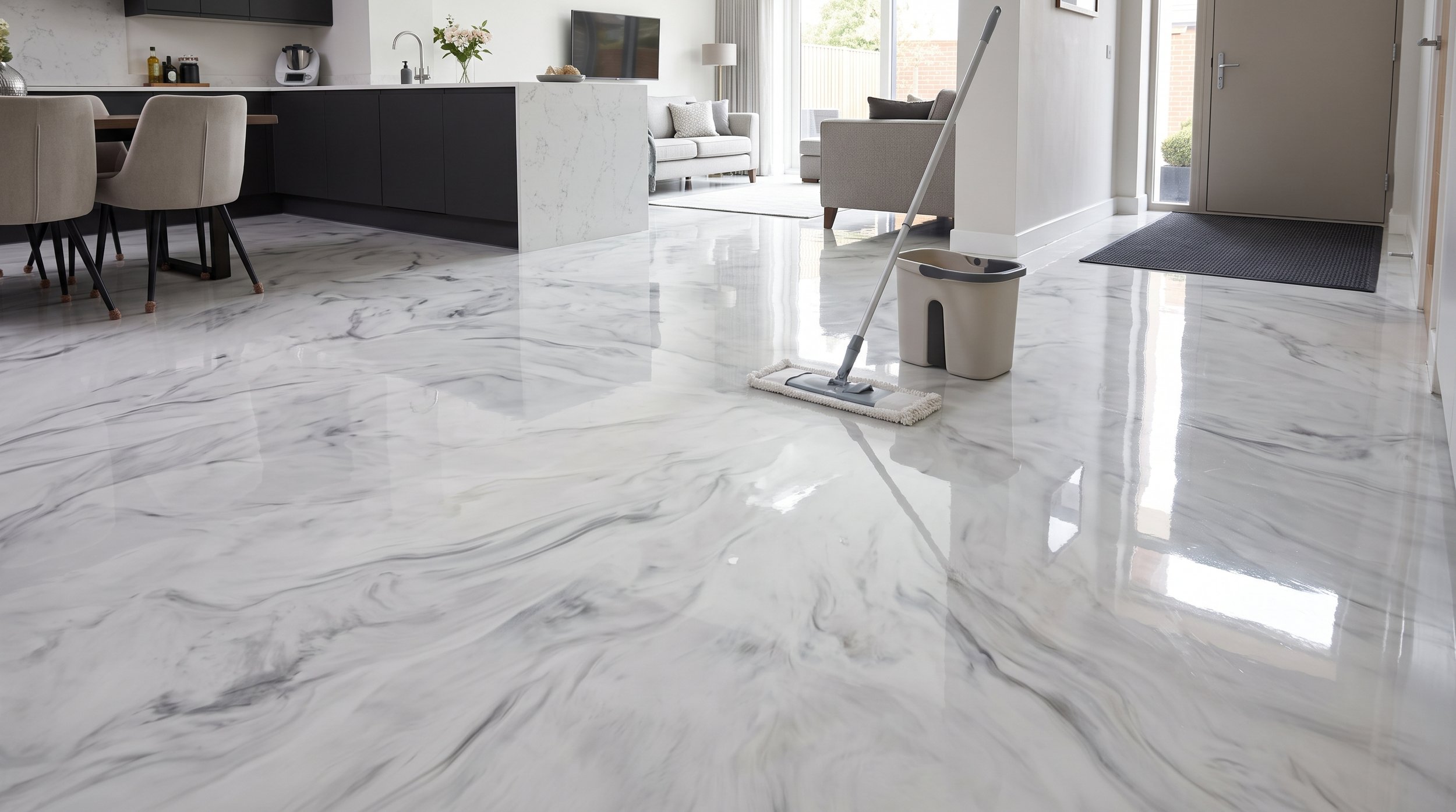
How to clean high gloss marble epoxy resin flooring - North West aftercare guide
Marble epoxy resin floors are a high-value, long-lasting investment for modern UK homes and commercial spaces. Offering a seamless, high-gloss visual that mirrors natural Italian marble without porous grout lines, they are both hygienic and visually striking. However, preserving that mirror-like finish in high-traffic North West properties requires the correct post-installation care routine.
In this comprehensive aftercare guide, our local flooring specialists break down the exact steps to clean, protect, and maintain your marble epoxy resin floors to keep them looking pristine for decades.
Local Coverage & Service Areas
Whether you need a new installation, a topcoat refresh, or technical aftercare advice, North West Resin Flooring Specialists Ltd provides specialist surface solutions across key North West locations:
Greater Manchester: Manchester City Centre, Altrincham, Sale, Stockport, Didsbury, Wilmslow
Merseyside & Wirral: Liverpool, Southport, St Helens, Formby, Birkenhead, Heswall
Cheshire: Chester, Warrington, Knutsford, Alderley Edge, Macclesfield, Crewe
Lancashire & North Wales: Preston, Blackburn, Blackpool, Flintshire, Wrexham
1. The Post-Installation Curing Phase (First 14 Days)
Before applying any liquid or moving furniture onto a newly installed marble epoxy floor, you must allow the resin system to achieve its full chemical cure.
0–48 Hours:      NO FOOT TRAFFIC (Allow primary hardening)
3–7 Days:        LIGHT FOOT TRAFFIC ONLY (Socks only, no outdoor shoes)
7–14 Days:       FULL CHEMICAL CURE (Safe for water, furniture, and routine cleaning)
Important Note: Do not wash the surface, use liquid detergents, or lay rugs and floor mats during the first 7 to 14 days. Trapped moisture under mats during the curing window can permanently haze the clear polyurethane topcoat.
2. Daily & Weekly Cleaning Routine for High-Gloss Resin
Abrasive dirt, grit, and mud tracked in during typical North West rainy weather act like fine sandpaper under foot traffic. Establishing a consistent cleaning routine prevents micro-scratching.
Daily Maintenance
Dry-Mop or Sweep: Dust-mop daily using a soft microfiber pad to capture loose dust and outdoor grit.
Vacuum Safely: If vacuuming, use a soft brush attachment or hard-floor setting. Never use a vacuum cleaner with a hard or rotating beater bar, as it will dull the glossy surface over time.
Weekly Deep Cleaning
Mix a pH-Neutral Cleaner: Dilute a dedicated pH-neutral floor cleaner (pH 7) in warm water.
Use a Microfiber Mop: Clean the surface using a flat microfiber mop. Avoid cotton string mops, which can leave lint and streaks behind.
Wring Out Excess Water: Damp-mop the floor without saturating it.
Air Dry or Buff: Quality pH-neutral cleaners leave zero chemical residue, meaning no rinsing is required to maintain a streak-free shine.
3. Cleaning Chemicals & Tools to Avoid
Using incorrect household cleaners will strip the clear coat, degrade the epoxy matrix, and turn a crystal-clear topcoat cloudy or yellow.
Cleaning Agent / ToolWhy It Damages Resin FloorsSafe AlternativeBleach & ChlorineCauses surface etching, chemical staining, and yellowing pH-neutral floor detergent White Vinegar & CitrusAcidic compounds erode protective sealers Warm water + neutral cleaner Ammonia Cleaners Leaves a dull, cloudy film over high-gloss topcoats Non-ionic surfactant cleaners Steam Mops Forces high-pressure heat into topcoats, causing delamination Damp microfiber mop Scouring Pads / Wire Mesh Gouges and scratches the clear coat permanently White nylon pads or microfiber
4. Preventive Measures to Prevent Scratches and Stains
Although commercial-grade epoxy resin is non-porous and impact-resistant, taking simple preventive measures extends its lifespan significantly:
Place High-Quality Entrance Mats: Position non-staining rubber-backed mats at all external doorways (especially during wet autumn and winter months) to collect grit and surface moisture before it hits the floor.
Fit Furniture Felt Pads: Apply heavy-duty felt pads to the legs of all chairs, tables, and movable furniture. Check and clean these pads regularly to ensure grit isn't embedded in them.
Wipe Spills Promptly: While resin is chemical-resistant, prolonged exposure to acidic liquids (red wine, lemon juice, coffee) or automotive fluids should be wiped up immediately using a damp cloth.
5. Long-Term Maintenance & Topcoat Restoration
Over 5 to 10 years of heavy residential or commercial foot traffic, high-wear zones (such as hallways or kitchen prep areas) may experience a minor loss of shine.
Annual Floor Polish (Optional): Applying a sacrificial acrylic floor wax or polish once a year adds an extra protective layer that absorbs micro-scratches.
Professional Buff & Recoat (Every 5–10 Years): Instead of replacing the floor, a specialist floor contractor can lightly sand (screen) the top layer and apply a fresh clear polyurethane topcoat to completely restore factory gloss.
Frequently Asked Questions About Resin Floor Maintenance
Are marble epoxy resin floors slippery?
Glossy epoxy can be slick when wet. During installation, contractors can incorporate anti-slip additives (such as fine aluminum oxide or micro-glass spheres) into the final clear topcoat to achieve recommended UK slip-resistance ratings (BS 7976-2) without ruining the marble aesthetic.
How do I remove stubborn rubber tire or shoe scuffs?
For minor rubber marks, spray a small amount of diluted pH-neutral cleaner onto the mark and gently rub it with a soft microfiber cloth or a soft white nylon buffing pad.
Can I use a steam cleaner on my resin floor?
No. Never use a steam mop on epoxy or resin surfaces. The intense thermal shock and pressurized moisture can cause cloudiness, moisture entrapment, or peeling of the topcoat.
Need expert advice on resin floor installation, repairs, or maintenance across Manchester, Liverpool, Cheshire, or Lancashire? Contact North West Resin Flooring Specialists Ltd today for professional guidance, sample kits, and site surveys.