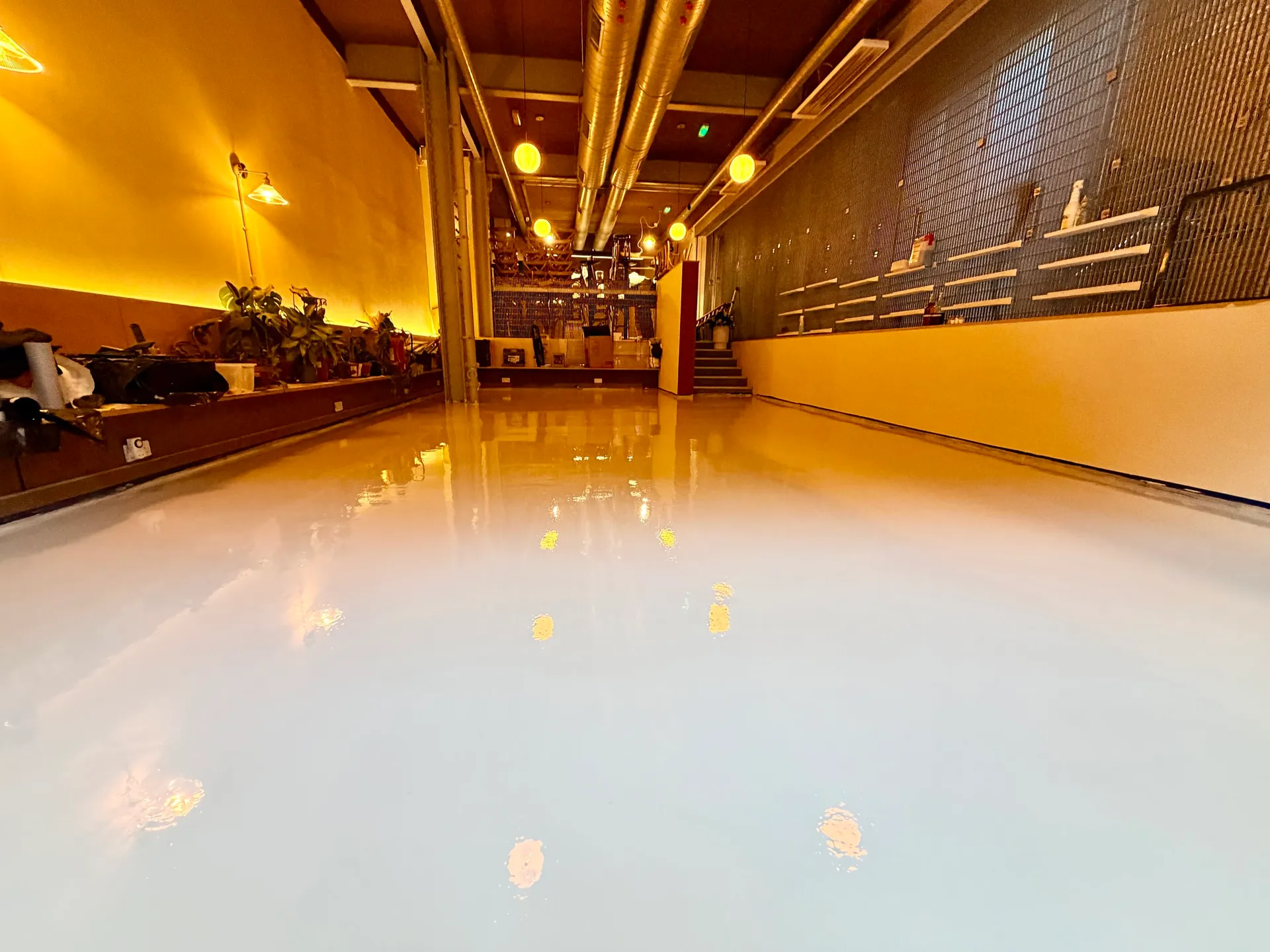
Solid colour epoxy
A tough, single-tone coating in grey, charcoal or clear. The workhorse choice for workshops, utility garages and storage areas where durability matters more than decoration.
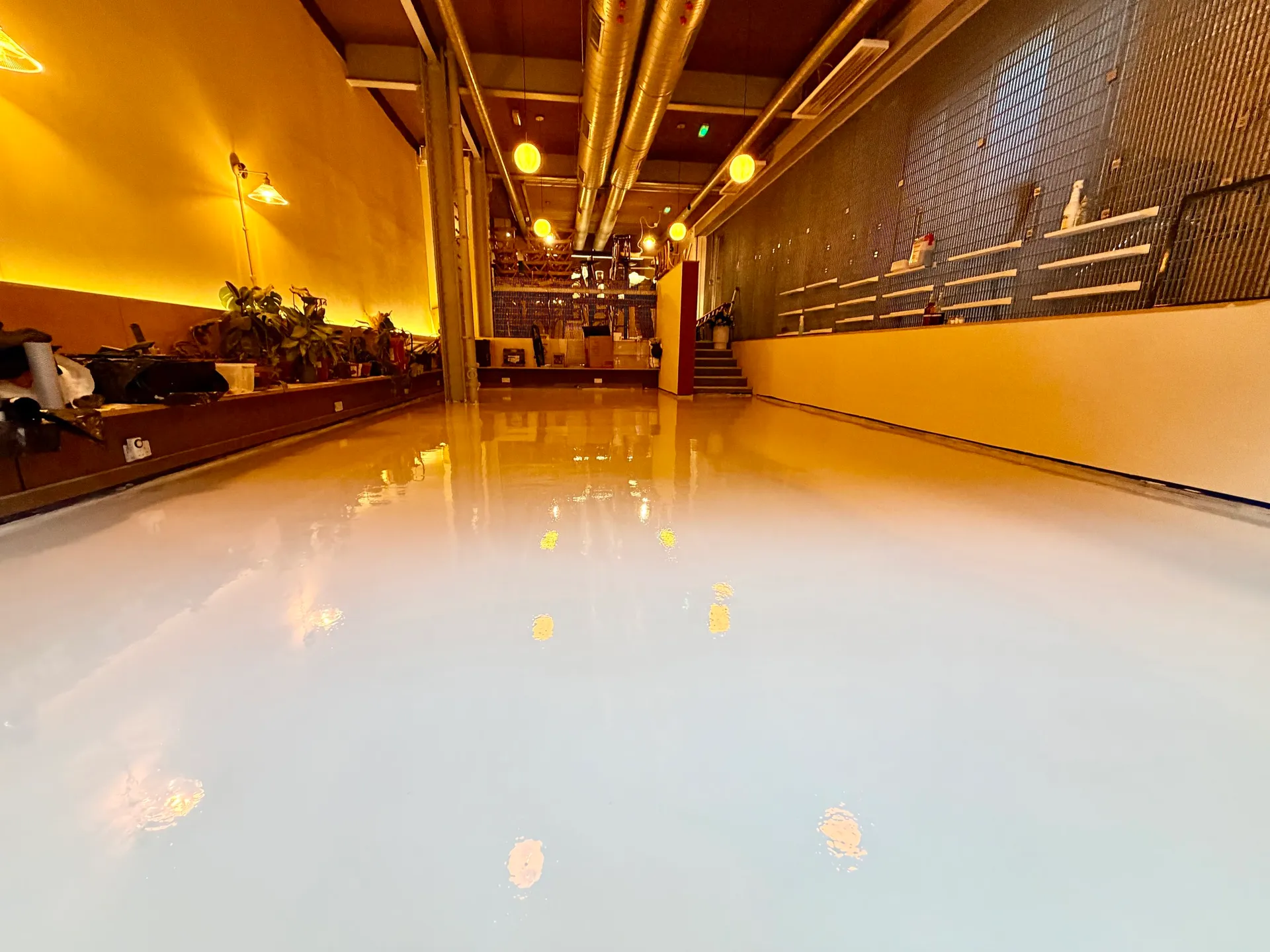
Epoxy resin flooring specialists
Epoxy flooring is a two-part resin system applied over a prepared concrete slab, curing into a hard, seamless surface that shrugs off vehicles, impacts and spills. We install epoxy resin floor systems in solid colour, flake, quartz and metallic finishes for garages, warehouses and commercial spaces across Greater Manchester, Cheshire, Merseyside, Lancashire and North Wales — always over properly diamond-ground, moisture-managed concrete.
★ Trust A Trader vetted🛡️ £5M / £10M insured🧾 Fixed itemised quotes, guaranteed 30 days
Each epoxy resin floor is specified around the space it serves — from functional solid coatings to bespoke metallic feature floors.
A tough, single-tone coating in grey, charcoal or clear. The workhorse choice for workshops, utility garages and storage areas where durability matters more than decoration.
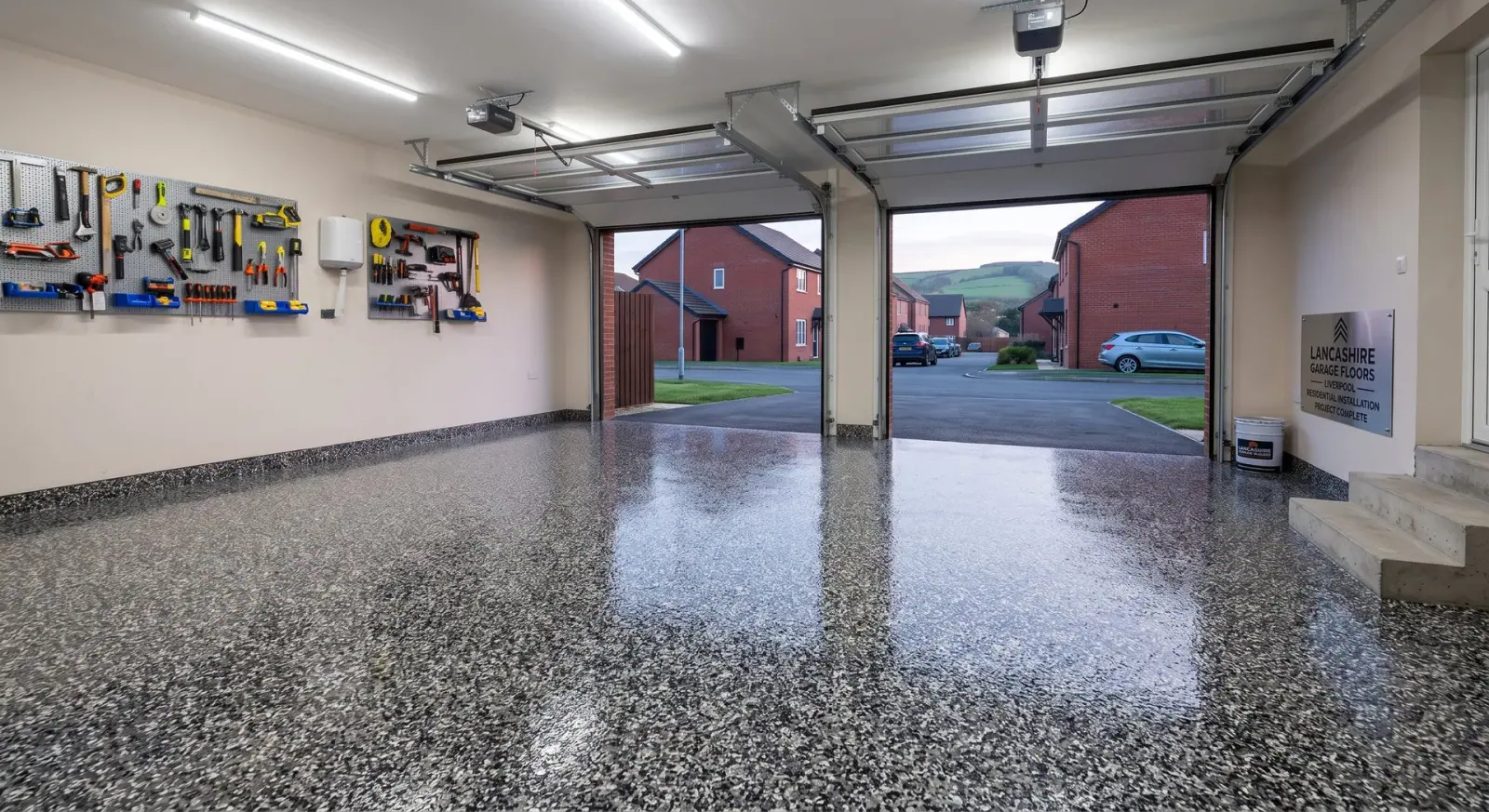
Coloured flake chips broadcast into the coating create a granite or terrazzo-style speckle that disguises dust, marks and imperfections. Ideal for garages, home gyms and showrooms.
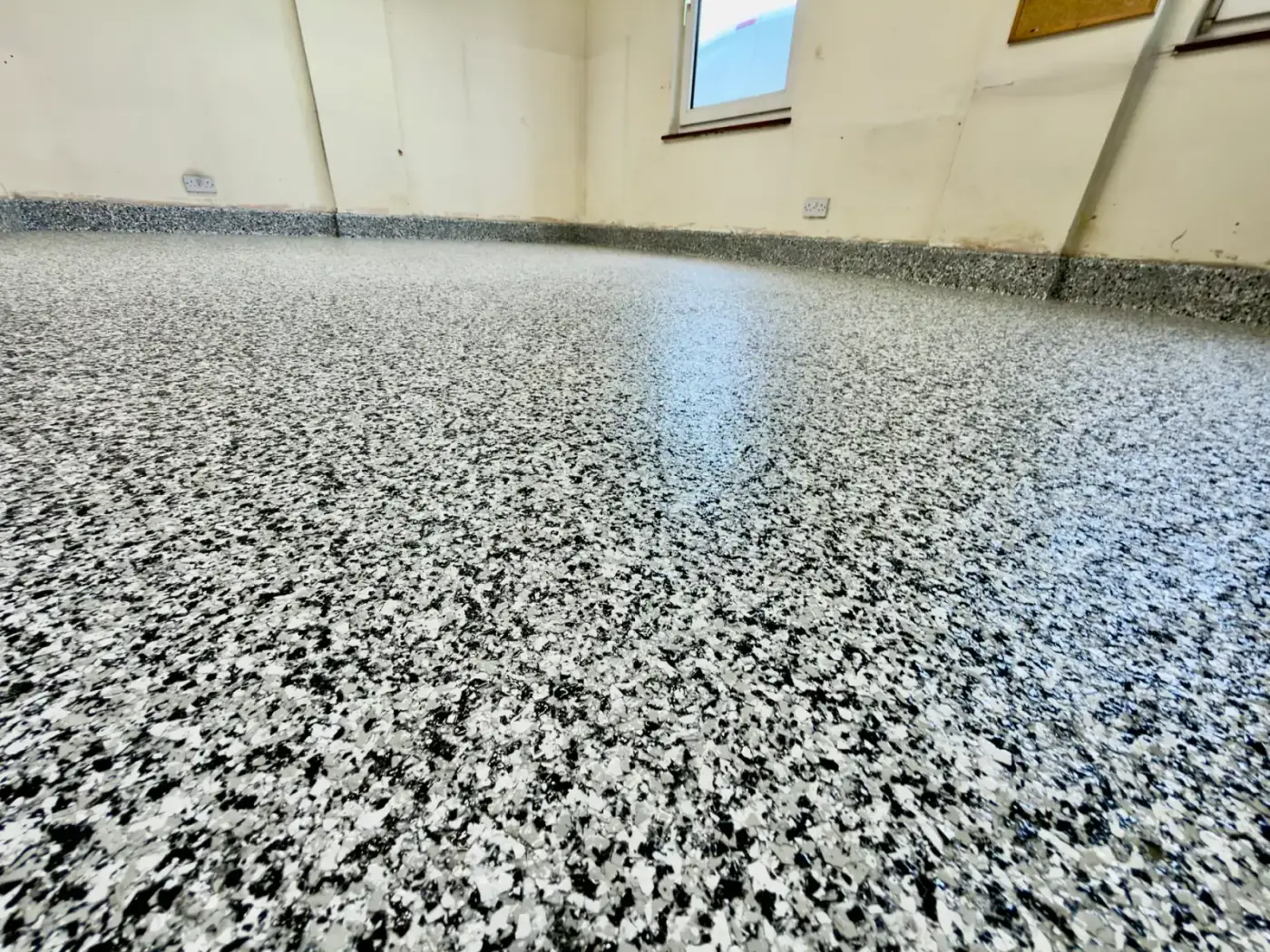
Coloured quartz aggregates blended into the resin give a hard-wearing, slip-resistant surface for demanding commercial floors and busy entrances.
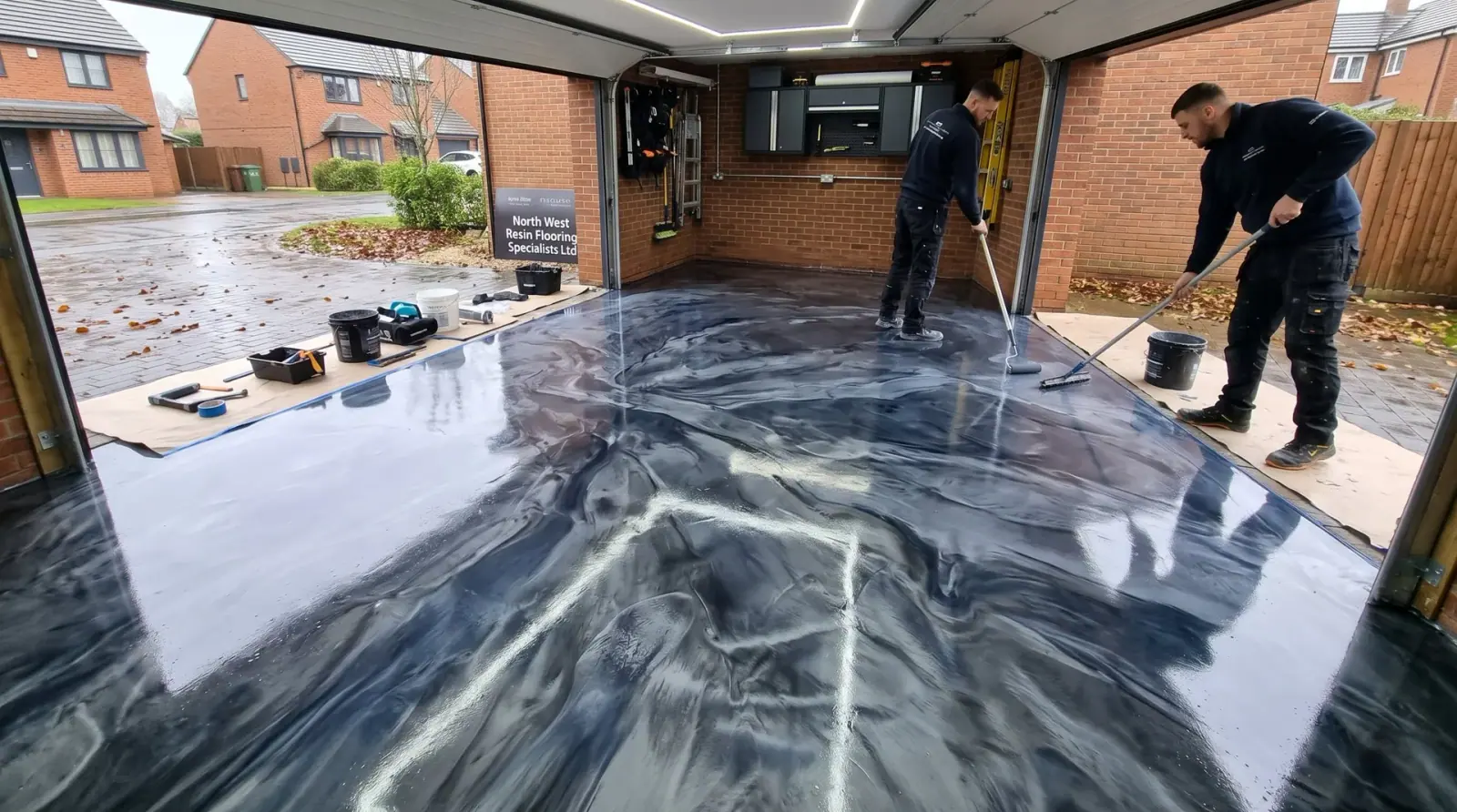
Metallic pigments are hand-poured to create flowing, three-dimensional depth — a statement floor for feature garages, retail spaces and living areas.
Hot-tyre resistant flake and solid systems, installed over diamond-ground concrete with damp proofing where moisture calls for it.
High-build coatings specified for pallet traffic, forklifts and impact, with line marking and repair of damaged slabs.
Seamless, hygienic floors for retail units, cafés, kitchens and workshops — easy to clean and quick to install with minimal downtime.
Metallic and seamless epoxy finishes for kitchens, hallways and open-plan living, fully compatible with underfloor heating.
“Epoxy” and “resin flooring” overlap, and microcement is a different material again. Here’s the short version.
| Feature | Epoxy resin floor | Microcement |
|---|---|---|
| What it is | A protective resin coating over a concrete slab | A 2–3mm hand-trowelled cement-based finish |
| Look | Solid colour, flake, quartz or metallic depth | Smooth, minimalist polished-concrete look |
| Best for | Garages, warehouses, workshops, commercial floors | Living spaces, walls, wet rooms, stairs |
| Thickness | Typically 0.5–4mm depending on the system | Ultra-thin 2–3mm build |
| Character | Hard, impact-resistant and easy to recoat | Continuous floors-to-walls finish, crack-bridging |
| Maintenance | Sweep and mop; resealable surface | Sealed, grout-free and easy to clean |
Planning a budget? Read our UK resin flooring cost guide: what you’ll actually pay in 2026.
Epoxy is a two-part thermosetting resin. A resin and a hardener are mixed on site, the chemical reaction starts, and the mixed material is applied to a prepared concrete slab within its working time. It cures hard, bonds to the slab mechanically, and forms a seamless surface with no joints.
That is the short version. The part that matters is the bond, and the bond is entirely down to the preparation.
Epoxy does not soak into concrete like a stain; it grips a mechanically roughened, clean, dry surface. On a smooth or contaminated slab it will sit on top and eventually lift. Most failures we are called out to look at are not coating failures. They are preparation failures: no diamond grinding, no moisture testing, coating laid over old sealer or oil.
A single-tone coating in grey, charcoal, black or a bespoke colour. The workhorse. It is the cheapest per square metre, it goes down fast, and it does the job in workshops, storage areas, utility rooms and light commercial floors. It shows marks more than flake, because there is no pattern to hide them.
Coloured vinyl flake is broadcast into a wet base coat, then sealed with a clear topcoat. The result looks like granite or terrazzo. It hides dust, tyre marks and minor imperfections, and it is the standard choice for garages, home gyms and showrooms where appearance matters. It is also more forgiving in daily use than a plain solid colour.
Similar idea, harder aggregate. Quartz systems are specified where the floor takes serious traffic, where slip resistance matters, or where a commercial kitchen or entrance needs a durable textured surface. Less decorative than flake, more functional.
Metallic pigment is hand-poured and manipulated while the resin is still liquid, creating depth and movement that reads almost like stone or water. No two are the same. It is the most expensive system and the least forgiving to install, and it is what most people mean when they fall in love with a resin floor online.
The system itself is only part of the number. The rest is the slab and the access.
A level, dry, sound slab with a straightforward route in takes the standard build-up and the standard programme. A slab that has held oil for twenty years, or one with a weak dusty surface and cracks through it, needs grinding further back, repairs and often a screed, and that labour is where the difference sits between one quote and another for the same floor area.
Moisture is the other one. Where readings say the slab needs a damp proof membrane, it is a line in the quote, and it is far cheaper than the alternative of a floor that blisters and has to be ground off. Area has an effect too: a large open floor is more economical per square metre than a small room, because setting up, masking and edge work are fixed costs regardless of size.
Treat these as ranges, not quotations. A real number needs a survey, because nobody can price a slab they have not seen. Ours are fixed and itemised, held for 30 days.
Load-bearing capacity, abrasion resistance from forklift traffic, and enough grip that a wet floor does not become a hazard. Line marking and bay demarcation are usually part of the job.
Seamless, impervious and washable, with no grout for bacteria or grease. Slip resistance is specified for wet zones rather than applied as an afterthought.
Appearance carries weight here, so metallic and flake systems are common. Downtime matters more than in a domestic job, which is why fast-cure systems and out-of-hours working come up.
Chemical spillage resistance, impact resistance and a surface that sweeps clean. Often a quartz or high-build system.
In all of these, return-to-service time is usually the client's real question, not the price. We programme the works around it and put the dates in writing. For commercial projects see commercial resin flooring, and for material supply or subfloor work carried out as part of a wider package, see trade supply and subfloor preparation.
Compatible, with the right build-up. Both wet and electric systems.
Two things have to be right. First, the heating has to be commissioned and tested before the resin goes down, so you are not discovering a fault through a finished floor. Second, the system has to be brought up to temperature gradually after installation, not run flat out on day one, because a rapid heat cycle during cure can stress the coating.
We confirm the commissioning and warm-up sequence at handover. It is one of the small things that determines whether a floor lasts fifteen years or three.
A properly prepared, correctly specified epoxy floor in a domestic garage will typically give you many years of service before it needs refreshing. Commercial floors under heavy traffic wear harder and are usually recoated on a maintenance cycle rather than replaced.
What shortens the life: no moisture management on a damp slab, no mechanical preparation, coating over a failing previous coating, and hot tyres parked on a freshly installed floor. What extends it: proper grinding, a DPM where it is needed, and choosing the right system for the traffic.
It is also refreshable. A tired epoxy floor can often be cleaned back and given a fresh topcoat rather than taken up and replaced, which is one of its practical advantages over tile.
Epoxy flooring is a two-part resin (resin and hardener) mixed on site and applied over a prepared concrete slab. It cures into a hard, seamless, dust-free surface that bonds to the slab and resists impacts, chemicals and vehicle tyres.
As a guide, commercial-grade systems typically run £60–£85 per m² and bespoke metallic marble finishes £85–£120 per m², + VAT. Every project is priced in a fixed itemised quote, guaranteed for 30 days with no hidden fees — see our full cost guide below.
Most residential projects, such as a garage, take 2–4 days including preparation and curing. Larger commercial floors are programmed per project. We confirm return-to-use times, including when a car can go back on the floor, before we start.
Yes — and it matters more than the coating itself. We mechanically diamond-grind the concrete with HEPA dust extraction, repair damage and install an epoxy damp proof membrane where moisture calls for it. Skipping preparation is the main reason coatings blister or peel.
Yes. Our seamless epoxy resin floor systems are fully compatible with wet and electric underfloor heating.
Across Greater Manchester, Cheshire, Merseyside, Lancashire and North Wales — including Liverpool, Chester, Altrincham, Wilmslow and the surrounding areas.
In practice, "resin flooring" is the umbrella term and epoxy is one type of it. Polyurethane is another, and it behaves differently: more flexible, better UV stability, and usually the right choice where a floor is in direct sunlight for long periods. We specify whichever suits the space.
Standard epoxy can yellow or fade with prolonged direct UV exposure. Where a floor sits in sun for long periods we would specify a polyurethane topcoat or a UV-stable system instead, and we will say so at the survey rather than after.
A correctly prepared and specified epoxy floor in a domestic garage gives many years of service before it needs refreshing. Commercial floors under heavy traffic are usually recoated on a maintenance cycle rather than replaced.
Usually. A scuff or a worn patch can often be cleaned back and re-sealed locally without replacing the whole floor. Damage caused by moisture coming from beneath is different: that needs the moisture dealt with, or the repair will fail the same way.
Sometimes. A sound, well-bonded two-pack coating can be abraded and overcoated. A failing coating, single-pack paint or old bitumen has to come off or be isolated first, because anything else will fail with it.
Installing this in a garage rather than a commercial space? Our garage flooring page covers flake, damp proofing and hot-tyre topcoats for vehicle use. See the finishes in practice in the resin flooring portfolio, or read about microcement flooring where a trowelled finish suits the space better. Guides: what resin flooring costs per m², microcement bathroom costs and installation, and can microcement go over tiles. To talk the job through, book a survey.
More questions? Read our full FAQs.
Request a fixed itemised quote, guaranteed for 30 days, or send us your postcode to check coverage.
We use analytics cookies to understand how visitors use our site. They are only set if you accept. You can read more in our privacy policy.