No grout
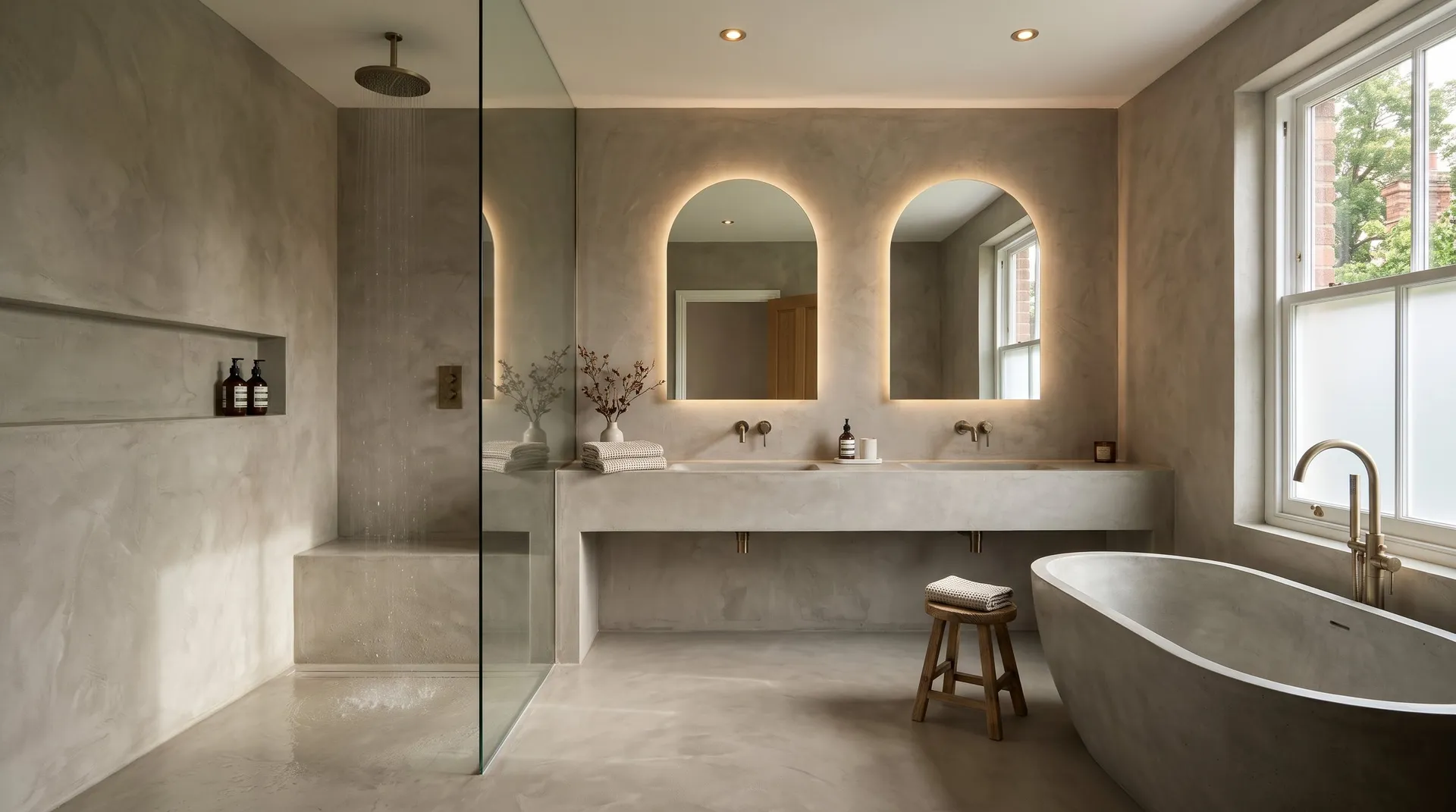
Nothing to scrub, nothing to discolour, nothing to re-grout in five years. In a bathroom or wet room that is the whole point.
Architectural microcement specialists
Microcement is a hand-trowelled 2–3mm decorative finish that goes over existing floors and walls to create a seamless concrete look. There are no tiles and no grout lines, it adds almost no height, and it works with underfloor heating. We install it across Greater Manchester, Cheshire, Merseyside, Lancashire and North Wales.
★ Trust A Trader vetted🛡️ £5M / £10M insured🧾 Fixed itemised quotes, guaranteed 30 days
Microcement is a fine mortar made from cement, resin, aggregates and pigment, applied by trowel in thin coats over a primed substrate. It sets hard, then gets sealed. It is not a paint and it is not a skim of ordinary plaster.
The finish you see is built up over several coats, each one trowelled by hand, which is why the surface has movement and depth rather than a flat printed pattern.
The whole system is around 2–3mm thick. That matters if you are refurbishing a room where floor height is tight, or covering walls you do not want to strip back.
Nothing to scrub, nothing to discolour, nothing to re-grout in five years. In a bathroom or wet room that is the whole point.
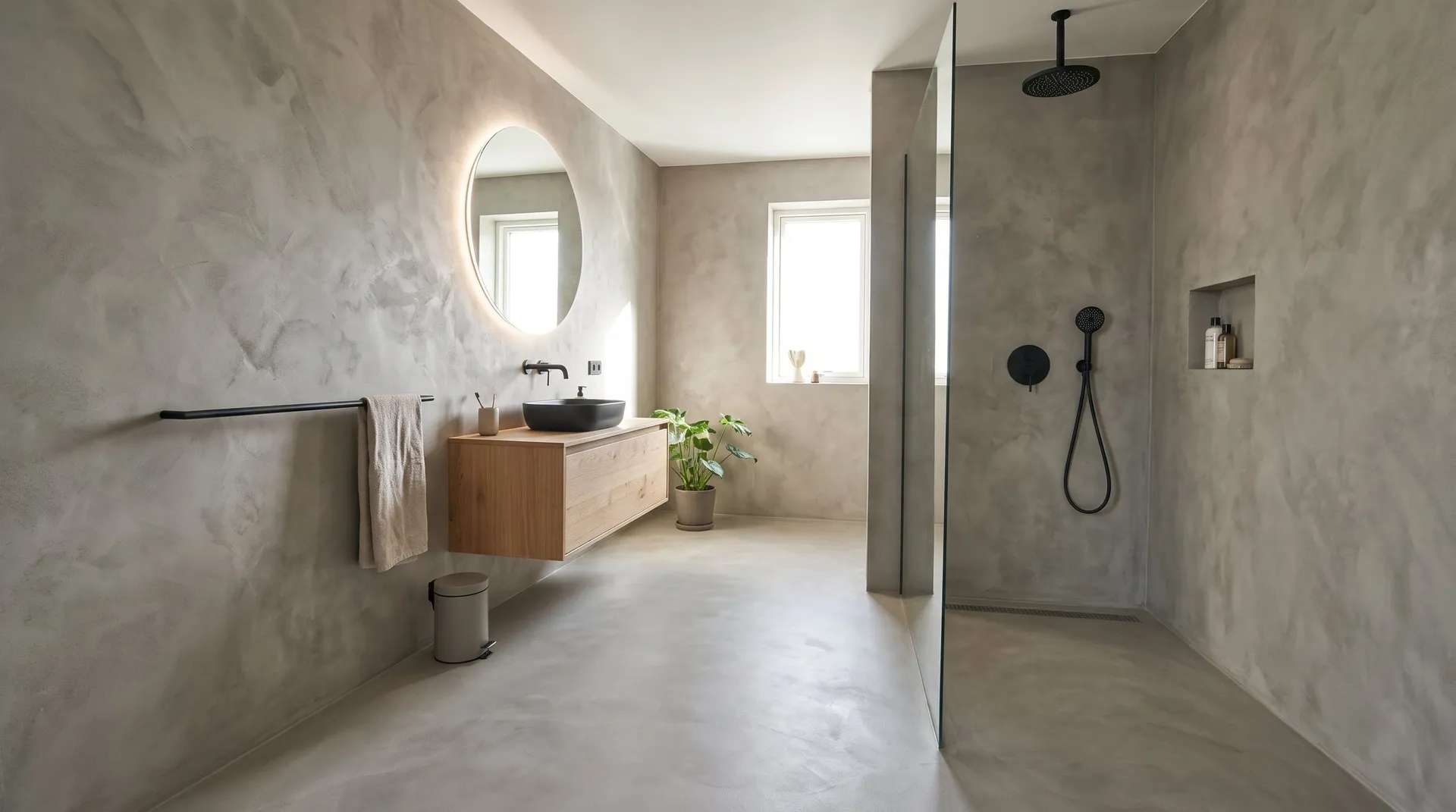
The same surface runs from floor to wall, through doorways, into a shower. No transitions, no trims, no thresholds.
Around 2–3mm, so you keep your skirting heights, door swings and floor levels.
Microcement works with both wet and electric systems when the build-up is specified correctly.
Localised damage can often be re-coated and re-sealed rather than replaced.
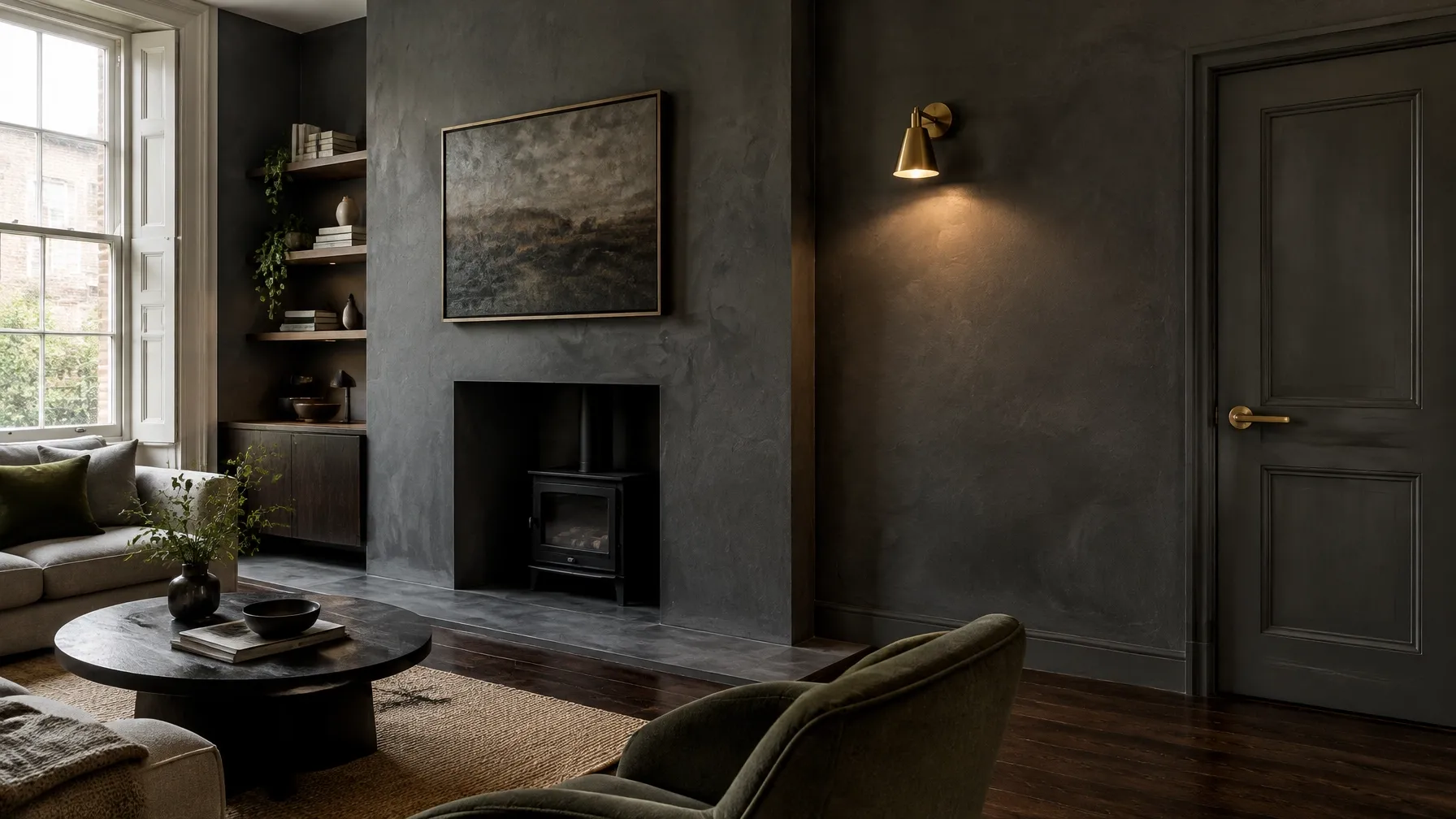
Warm neutrals, cool greys, near-black, or a bespoke blend matched to a sample you bring us.
Living areas, hallways, open-plan kitchens, extensions, garden rooms, retail and hospitality spaces. Over existing tiles, screed, concrete or timber, after the right preparation.
Feature walls, chimney breasts, kitchen splashbacks, bedroom walls, commercial interiors. Walls are usually finished matte, which is the most forgiving sheen for hand-applied work.
This is where microcement earns its keep. Floor and walls in one continuous finish, with the correct tanking beneath the decorative system so the waterproofing does its job underneath and the visible surface stays seamless.
A trowelled microcement surface on an island or worktop gives the concrete look without the weight of a cast slab.
Cafés, salons, showrooms and offices where a continuous floor is easier to clean and looks better than patched vinyl.

Guide prices for a professionally applied, sealed system, excluding VAT.
| Application | Guide price per m² |
|---|---|
| Floors only | £90–£140 |
| Walls only | £70–£110 |
| Floors and walls together | £120–£180 |
A typical family bathroom of about 6m² of floor and 24m² of wall, so roughly 30m² of treated surface, usually lands somewhere between £4,300 and £7,200 before VAT, depending on the condition of the surfaces and how much preparation is needed.
These are guide ranges. The only number that means anything is the one after we have seen the room. We give fixed, itemised quotes held for 30 days, with no hidden fees.
Usually, yes. Tiles are often a good substrate for microcement, because the surface is already sound and flat. It is not automatic, and it is not a case of trowelling straight onto the tile.
We check that every tile is firmly bonded with no hollow or drummy areas, that the grout lines are stable, and that there is no movement or damp underneath. Loose tiles come off. Grout lines get filled and levelled so they do not telegraph through the thin finish. The whole surface is then mechanically keyed and primed before the first coat goes on.
If the tiles are sound, an overlay saves you the cost and mess of removal and keeps the floor level where it is. If they are not, we will tell you before we quote.
For the detail on tiled walls, read our guide to putting microcement over tiles.
We look at the substrate, check for movement, and test moisture. On concrete, relative humidity needs to be right before anything goes down.
Floors are mechanically diamond ground to a CSP 2–3 profile with HEPA dust extraction. Walls are sanded and repaired. Skirting, doors and fittings are protected.
A compatible primer seals and keys the surface so the first coat bonds properly.
Waterproofing goes in at shower zones, floor-to-wall junctions and upstands, before any decorative work.
The first trowelled layer builds the foundation and flattens minor imperfections.
Two or more further coats, trowelled by hand, building the depth and the texture you see.
The finish is sealed in the sheen you chose. Then it cures, and we tell you exactly when the room can be used and when it can get wet.
Most rooms take 3–5 days on site, including preparation, coats and sealing. A bathroom with floor and walls plus tanking sits at the top of that range. Larger or multi-room projects run longer.
You can usually walk on the floor before the full cure is complete, but the finish needs protecting from water and heavy loads for a period afterwards. We give you the dates in writing at handover, and our FAQs answer the questions we get asked most about timings.
A sealed microcement floor is hard-wearing and designed for everyday domestic use. It resists normal foot traffic, furniture and cleaning. It is not indestructible. Dropped heavy objects can chip it, and dragging metal across it can mark it.
The honest position is that a microcement finish will show wear in the same way a natural stone or polished concrete floor does, and it will age rather than stay factory-new.
Cleaning is simple: a pH-neutral cleaner and a mop. No abrasive products, no bleach-based sprays on the sealer.
If it does get damaged, most problems are repairable. Light scuffs and dull patches can be re-sealed. A chip can be built back and blended. A tired surface can be cleaned back and re-sealed without replacing the floor.
| Feature | Microcement | Porcelain tiles | Polished concrete | Vinyl |
|---|---|---|---|---|
| Seams | None | Grout lines throughout | None, but needs joints | Seams at edges |
| Thickness | 2–3mm | 10mm plus adhesive | 100mm plus slab | 2–5mm |
| Warm underfoot | With underfloor heating | Cold unless heated | Slow to respond | Warm |
| Grout maintenance | None | Regular cleaning, re-grouting over time | None | None |
| Repairable in situ | Yes, usually | Yes, tile by tile | Difficult | Replace the area |
| Best for | Seamless floors and walls | Wet areas, high traffic | Large commercial floors | Budget refurbishment |
Prefer a marble look rather than concrete? See our liquid marble floor page, or compare every finish we install on our services page.
Guide prices are £90–£140 per m² for floors only, and £120–£180 per m² for floors and walls together, excluding VAT. The final figure depends on the area, the substrate and how much preparation is needed.
Yes, when it is installed as a full system with correct tanking beneath the decorative coats. Ask any installer to confirm how the waterproofing is being done, because the visible surface is not the waterproofing.
Yes, with both wet and electric systems. The heating needs to be commissioned and running correctly before installation, and brought up to temperature gradually after.
Usually yes, provided the tiles are sound and well bonded. Loose tiles are removed, grout lines are filled and levelled, and the surface is keyed and primed first.
The standard sealed finish is smooth. For shower floors and wet areas we specify an anti-slip finish, typically to R11, applied across the whole system rather than just a sample.
Hairline cracking can occur in any cement-based finish if the substrate moves or the system is applied too thin or too fast. Correct preparation, a stable substrate and the specified coats are what prevent it. This is why we diamond grind and test moisture before quoting.
Typically 3–5 days on site, then a curing period before the floor takes water or heavy furniture. We confirm the dates at handover.
Usually. Light marks can be re-sealed, chips can be filled and blended, and a dull or worn surface can be re-sealed without replacing the floor.
Yes. We bring physical sample boards to the survey so you can see the colour and sheen in your own light, not on a screen.
Across Greater Manchester, Cheshire, Merseyside, Lancashire and North Wales, including Manchester, Liverpool, Altrincham, Knutsford, Wilmslow, Chester, Formby, Southport, Warrington and Deeside.
More questions? Read our full FAQs. For costs in detail, read our UK flooring cost guide and our microcement bathroom guide.
We visit, look at the surfaces, test what needs testing, and bring samples. Then we send a fixed, itemised quote held for 30 days. We are Trust A Trader vetted and hold £5M Public Liability and £10M Employers' Liability insurance.
We use analytics cookies to understand how visitors use our site. They are only set if you accept. You can read more in our privacy policy.