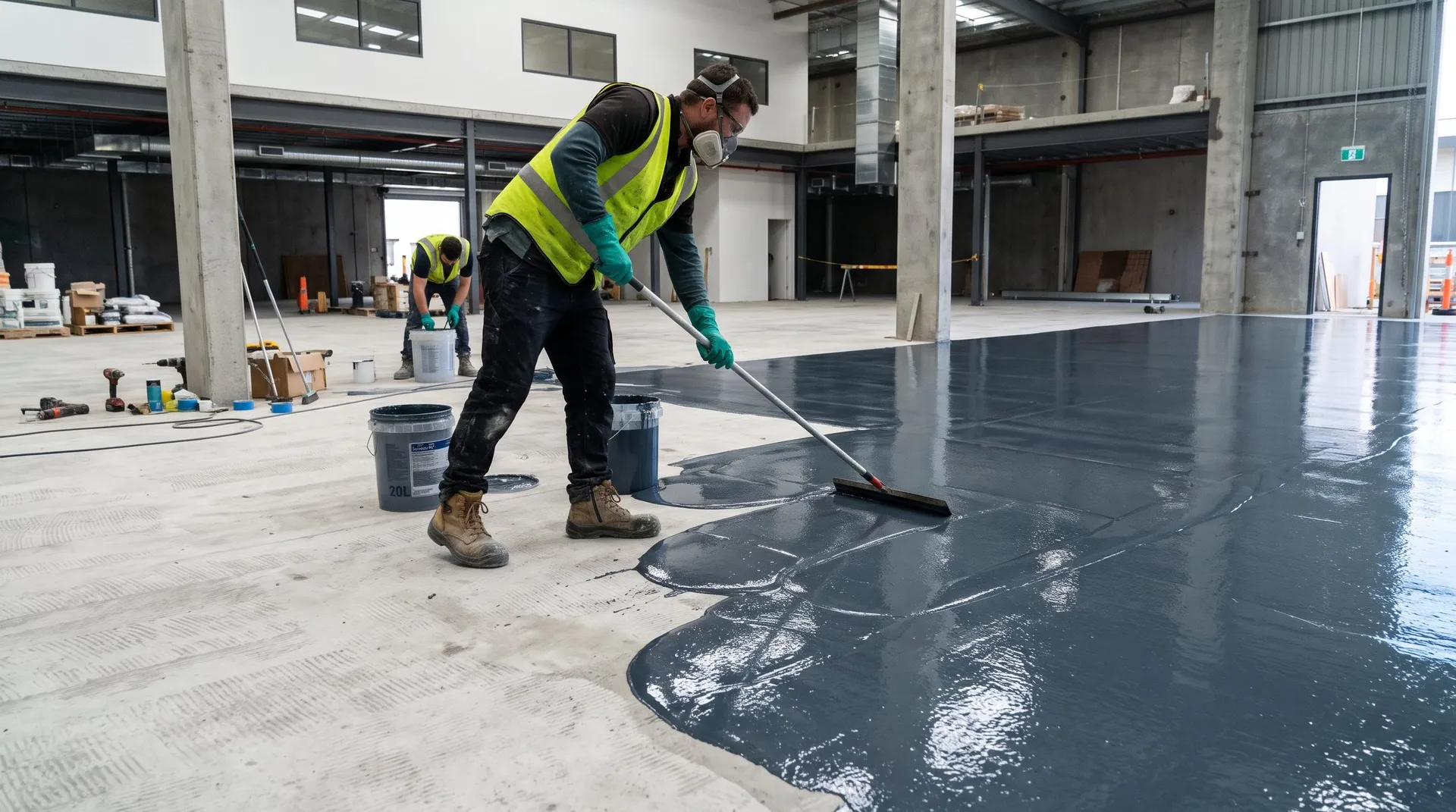
A proper garage floor is more than a coat of paint. We install flake, solid colour and metallic garage flooring systems across the North West — every one diamond-ground with HEPA dust extraction, repaired and moisture-managed before the finish goes down, so it stays bonded for years instead of peeling in six months.
★ Trust A Trader vetted🛡️ £5M / £10M insured🧾 Fixed itemised quotes, guaranteed 30 days
Garage flooring systems
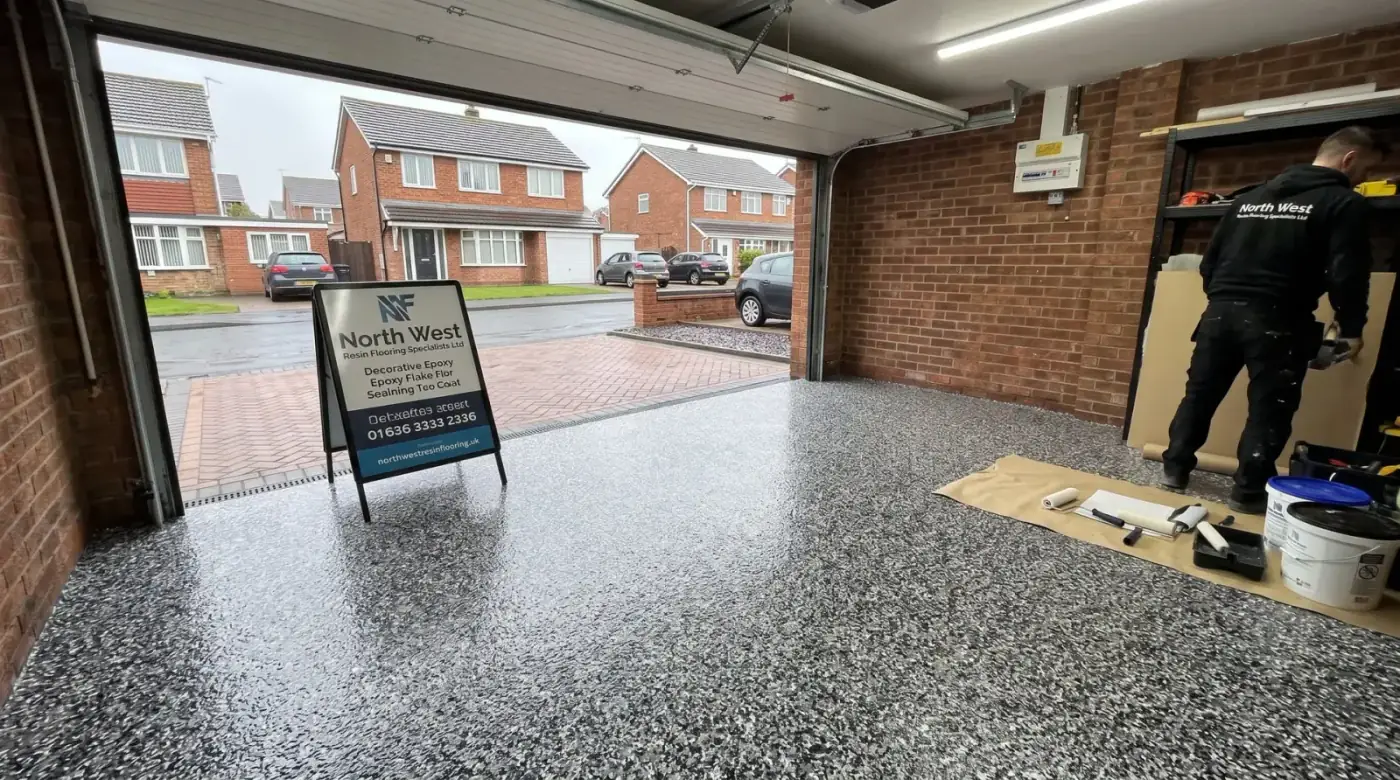
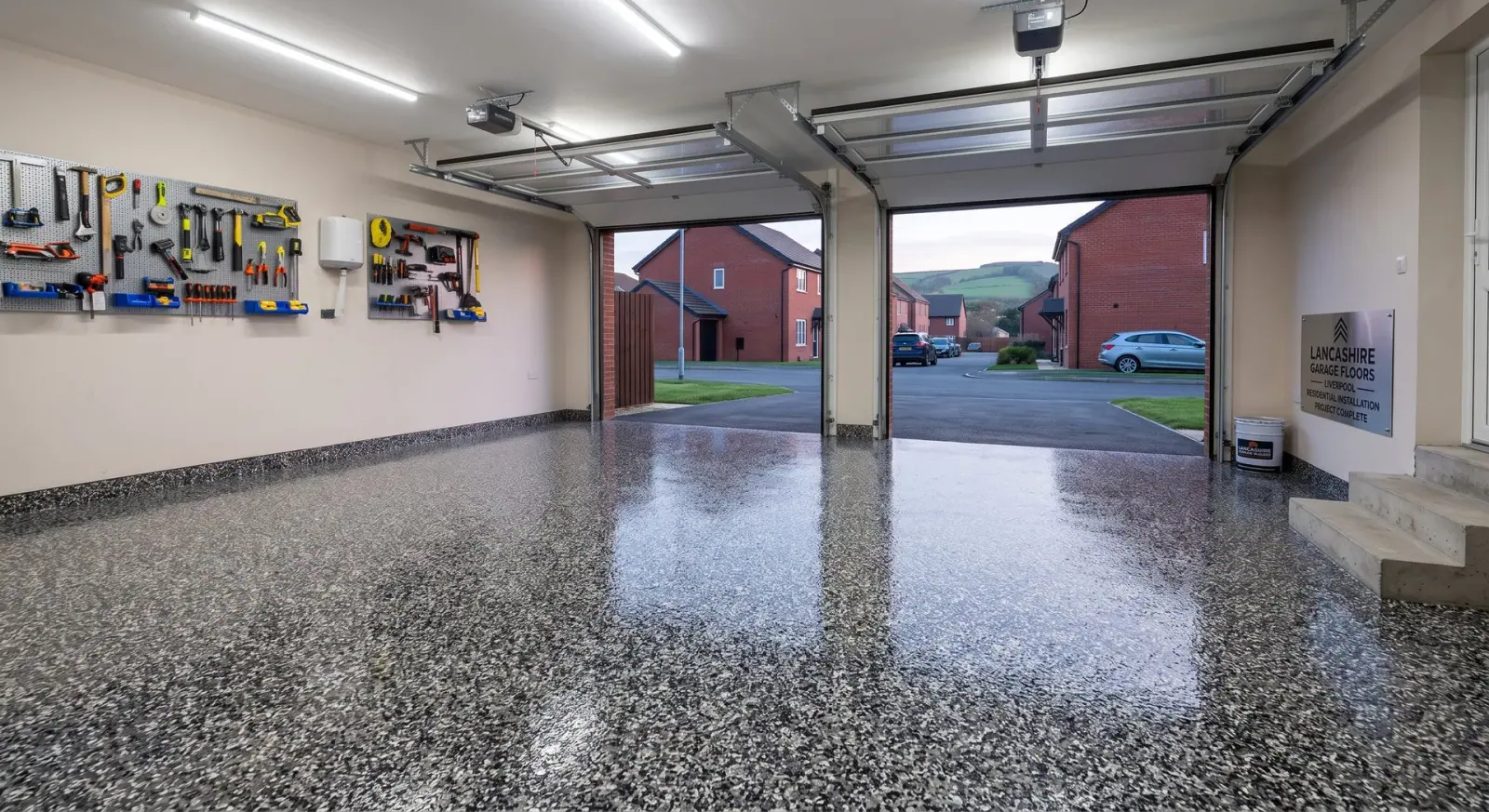
Decorative flake systems
Coloured flake chips broadcast into a high-build resin create a tough, granite-style speckled finish. Hot-tyre resistant, slip-resistant options available, and the texture hides everyday dust and marks. The signature prestige garage floor.
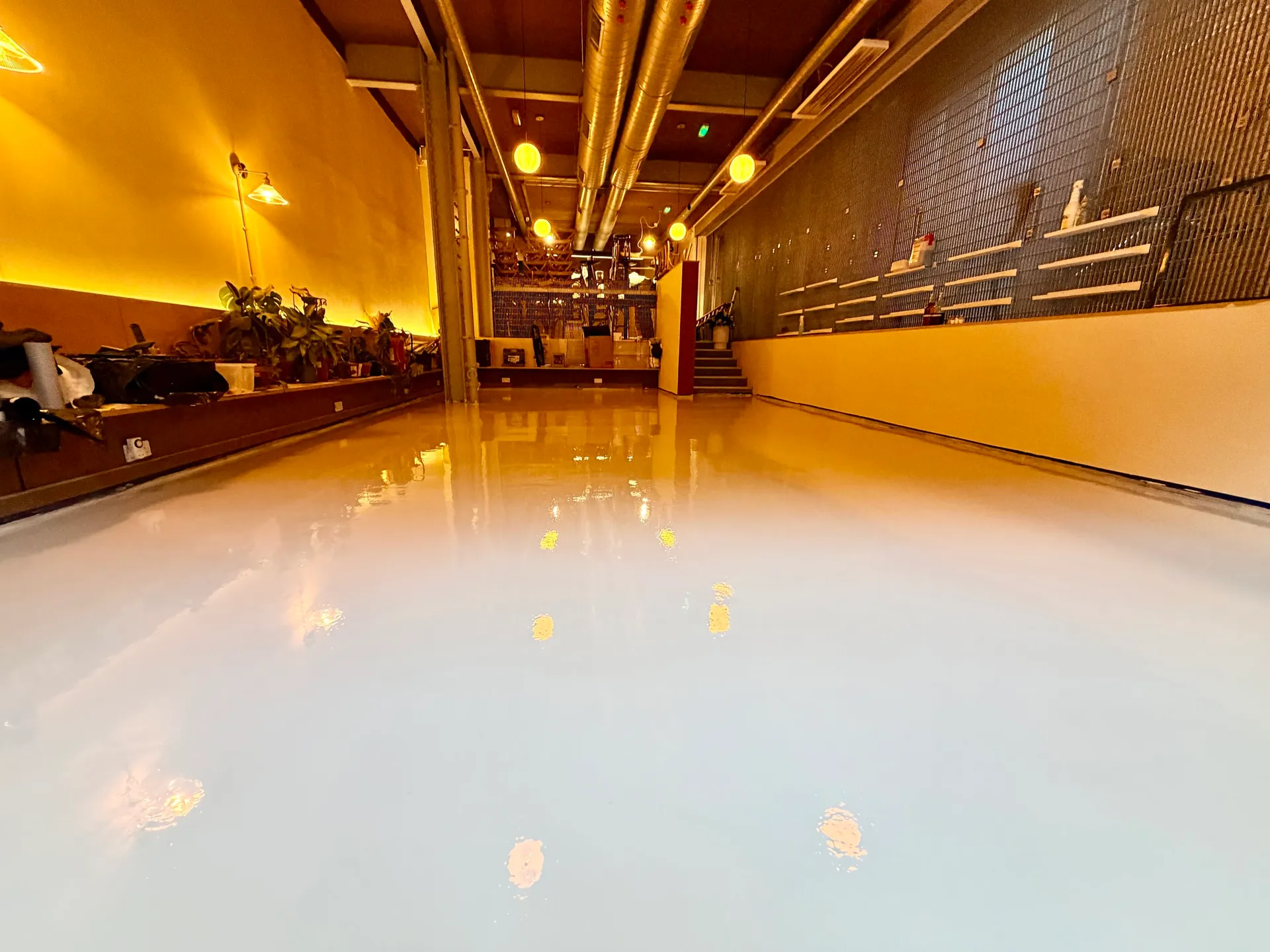
Solid colour epoxy coatings
A clean, single-tone floor in grey, charcoal or clear for workshops, vehicle storage and utility garages. Hard-wearing, dust-free and easy to sweep.
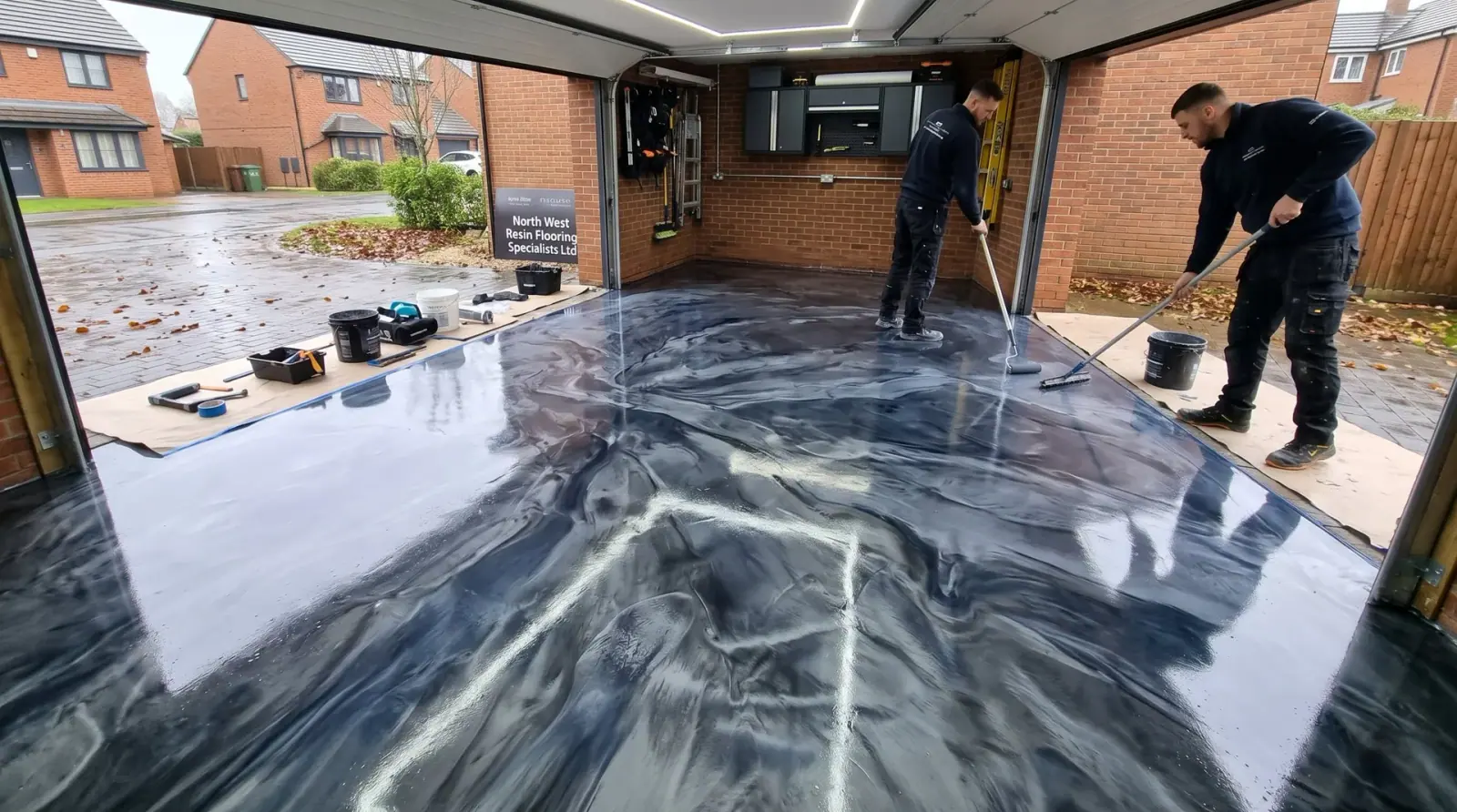
Metallic marble finishes
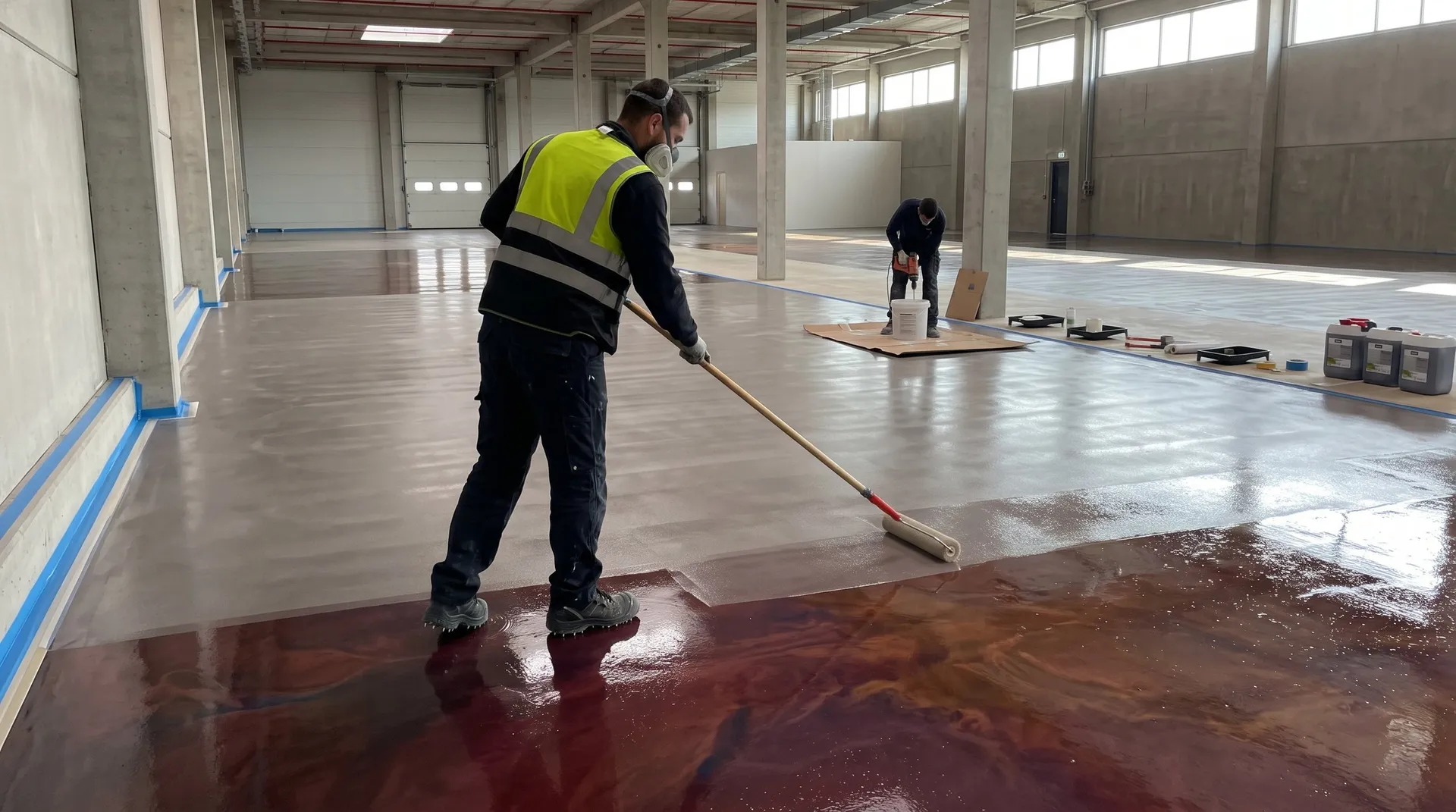
Hand-poured metallic pigments give feature garages and showpiece spaces real depth and movement. A bespoke finish that turns a garage into part of the home.
Damp proofing & moisture management
Rising damp is the number-one killer of garage coatings. Where moisture readings call for it, we install an epoxy damp proof membrane before the finish so the floor doesn’t blister or peel.
Why garage floors fail — and how we prevent it
A garage coating is only as good as what’s underneath it. Our four-step preparation is included in every install.
Step 01
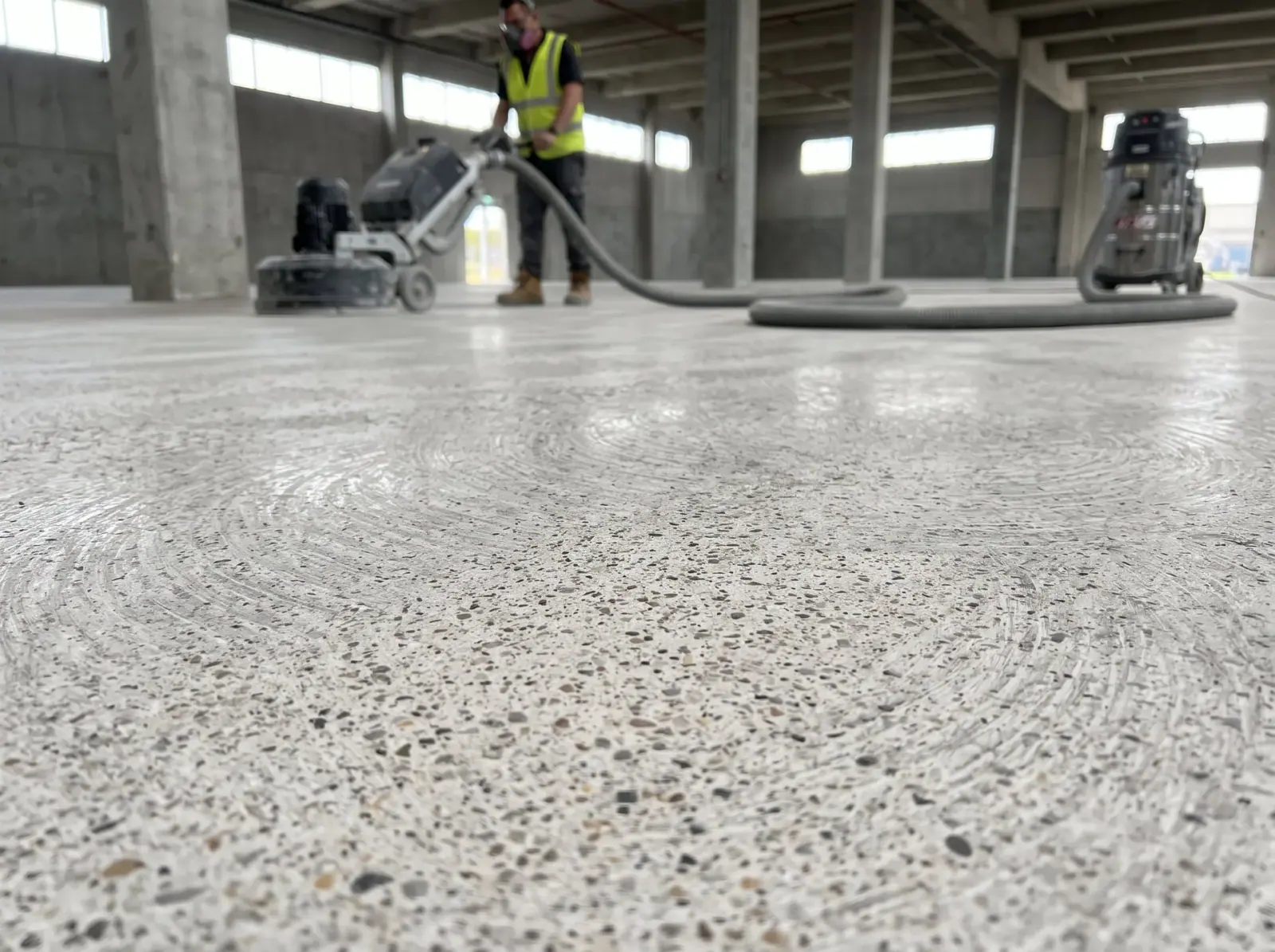
Mechanical diamond grinding
We grind the slab with HEPA dust extraction to remove laitance and open the surface, so the coating bonds properly instead of sitting on top.
Step 02
Crack & slab repair
Cracks, holes and old contaminates like bitumen or oil are repaired and sealed so they don’t telegraph through the new floor.
Step 03
Damp proof membrane
Where moisture readings are high, an epoxy DPM blocks rising damp — the main cause of peeling and blistering coatings.
Step 04
Finish & topcoat
The flake or colour system is sealed with a durable topcoat in matte, satin or gloss, matched to how the garage is used.
Garage flooring cost: what actually drives the price
Two garages of the same size can be quoted very differently, and it is almost never the flake or the colour that causes the gap. It is what happens before the finish goes on.
The condition of the slab
A sound, dry, recently laid slab takes a straightforward system. A 1970s garage floor with a crumbling surface, old oil contamination and hairline cracks needs grinding further back, crack repair and often a levelling screed before anything decorative goes down. That work is invisible when it is finished and it is the difference between a floor that lasts and one that peels.
Moisture
A garage slab sitting on damp ground, with no damp proof course, will push moisture up into any coating. Where readings call for it we install an epoxy damp proof membrane as part of the build-up. On a garage with a known damp problem this is not optional, and it is a real line in the quote.
Size, and how many bays
A single garage is a small job with a fixed amount of setting up, masking and edge work. A double or triple is proportionally cheaper per square metre because the middle is easier than the edges. Above about 60m² you are into the territory where the programme and access start to matter as much as the area.
Access and the door
A garage can usually be worked on from the front, which keeps the job simple. Blocked driveways, shared access, or a garage with no external door change how we sequence it.
The finish itself
A solid colour coating is the cheapest system. Flake costs more because of the broadcast and the extra topcoat. Metallic is the most expensive because it is hand-poured and every floor is different.
System
Guide price
Solid colour epoxy
from £60/m²
Decorative flake
£60–£85/m²
Metallic marble
£85–£120/m²
Guide prices excluding VAT. Treat them as a range, not a quotation: the real figure needs a survey of the slab.
Garage flooring ideas by how you use the space
The working garage
Tools, a bench, bikes, maybe a motorbike. You want a floor that sweeps clean, does not turn to dust and does not show every scuff. A solid colour epoxy in mid-grey is the sensible answer, light enough to see dropped screws and dark enough not to show tyre marks. Add a satin topcoat rather than gloss, because gloss shows every mark on a floor that gets used.
The prestige or classic car garage
This is where flake and metallic earn their money. A full-broadcast flake in charcoal and grey reads as granite and hides dust between cleans. Metallic marble gives you depth and movement that changes with the light. Either way, specify a topcoat that resists hot tyres, because a car parked on a freshly driven-in hot tyre will mark a cheap coating.
The gym
Home gyms need grip and a surface that will take a dropped dumbbell without chipping through to concrete. A flake system with a textured topcoat gives you both, and it hides the rubber mat marks that plague painted floors.
The utility or storage garage
Often the least glamorous and the most used. A solid colour coating, no flake, is right here. You are protecting the slab from dust and damp, not decorating.
The garage becoming a room
Increasingly the garage is being pulled into the house as a utility, an office or a playroom. If that is the plan, say so before we quote, because the system changes: you may want a smoother finish, a warmer colour, and to plan the floor around whatever goes on top of it.
Can you put garage flooring over an existing coating?
Sometimes, and sometimes not. It depends entirely on what is already there and how well it is stuck.
A sound, well-bonded epoxy or two-pack coating can sometimes be mechanically abraded and overcoated. A failing coating cannot. If it is peeling at the edges or lifting in sheets, the new floor will fail with it, so it comes off.
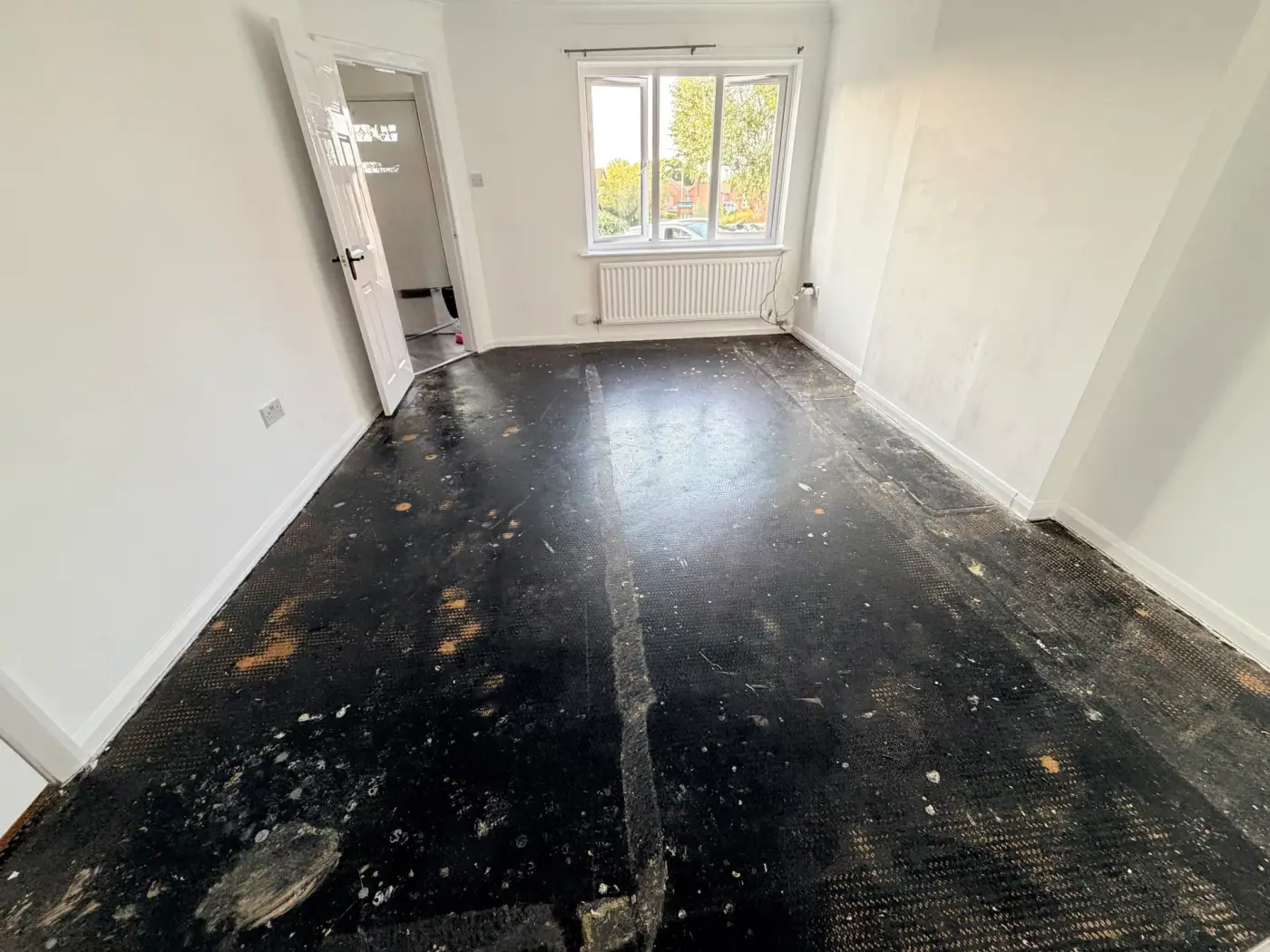
Old single-pack garage paint is usually a removal job, because it is too soft for anything to bond to reliably and it will delaminate under a rigid resin. Old bitumen is the other common one. Bitumen is not compatible with epoxy and has to be removed or isolated before we can build up. We test for it at the survey rather than discovering it mid-job.
The honest version: overcoating is cheaper when it is possible, and it is not possible as often as people hope. We will tell you which one you have before you commit.
Do you need a damp proof membrane in a garage?
If the garage floor sits on ground with no damp proof course, and moisture readings come back high, then yes. This is not a sales upsell. It is the single most common reason garage coatings fail.
What happens without one: moisture vapour moves up through the slab, hits the underside of the coating, and pushes. The coating blisters, then peels, usually within a year or two, and always in the same places. Grinding it off and recoating without addressing the moisture just restarts the clock.
A surface damp proof membrane goes down over the prepared slab, before any decorative system, and blocks that vapour. On a garage with a known damp history, or a slab that was poured without a DPC, budget for it from the start.
Garage floor maintenance: what it actually takes
Very little, which is the point. Sweep or vacuum as needed. Mop with warm water and a pH-neutral cleaner when it looks dirty. That is genuinely it for normal domestic use.
What to avoid: abrasive powder cleaners, which dull the topcoat; bleach-based sprays left to sit on the surface; and dragging anything metal across it, which will scratch a satin or gloss finish. A jack with a sharp metal foot is the classic garage-floor scratch, so put a piece of board under it.
Hot tyres on a freshly installed floor are worth thinking about. A car driven straight in after a long motorway run puts hot rubber on a coating that is still fully curing. Wait the period we give you at handover before parking on it.
If the floor does get marked or scratched, a satin or matte topcoat can often be cleaned back and re-sealed locally rather than the whole floor being replaced. Gloss is less forgiving, which is worth knowing before you choose the sheen.
Garage flooring FAQs
How much does garage flooring cost?
As a guide, garage systems typically sit in the £60–£85 per m² range, + VAT, depending on preparation, moisture conditions and the finish chosen. Every project is priced in a fixed itemised quote, guaranteed for 30 days with no hidden fees.
How long does a garage floor installation take?
A typical single or double garage takes around 2–4 days including diamond grinding, repairs, moisture management and curing. We confirm the programme and when you can park the car back on it before we start.
Will the floor resist hot tyres and oil?
Yes — professionally specified systems are designed for vehicle tyres, oils and everyday garage spills. The key is proper mechanical preparation and, where needed, a damp proof membrane, because coatings that fail usually fail from poor bonding or moisture, not the coating itself.
My garage floor is dusty and crumbling. Can you still coat it?
Usually, yes. A dusty or weak surface is exactly what diamond grinding and, if needed, a fibre-reinforced levelling screed are for. We assess the slab in a free site survey and tell you honestly what it needs.
Can you fix a garage floor that’s already peeling?
Yes. Peeling is normally moisture or poor preparation. We grind the failed coating back, install a damp proof membrane where readings call for it, and rebuild the system properly. See our guide on why epoxy floors peel for the detail.
Where do you install garage flooring?
Across Greater Manchester, Cheshire, Merseyside, Lancashire and North Wales — including Liverpool, Chester, Altrincham, Wilmslow and surrounding towns.
Is resin flooring suitable for a garage?
Yes, and it is the most common garage floor system we install. A properly prepared epoxy or flake system handles vehicle traffic, oil, hot tyres and dropped tools far better than paint or bare concrete.
Can I put a garage floor down myself?
You can buy kits, and plenty of people try. The reason it usually goes wrong is preparation: without diamond grinding to open the surface, and without moisture testing, even a good kit will peel. If you are going to do it yourself, spend the effort on the prep, not the topcoat.
Will a garage floor crack?
The coating will not crack on its own if the slab is stable. What happens instead is that cracks in the slab telegraph through into the coating. That is why crack repair is part of the preparation: we fill and stabilise them first, then coat.
Can you match a garage floor to my car or my house?
Colour matching is possible with solid systems and with bespoke pigment blends. Bring a sample or a reference and we will match as closely as the pigment range allows, and show you a physical sample board before committing.
Do you floor garages that are used commercially?
Yes — workshops, valeting bays, MOT bays and small industrial units. Those usually need a heavier-build system and often line marking, and we will specify accordingly rather than using a domestic system.
How soon can I park on a new garage floor?
It depends on the system and the conditions. We give you the date in writing at handover. As a rule it is measured in days, not hours, and full chemical cure takes longer than foot traffic.