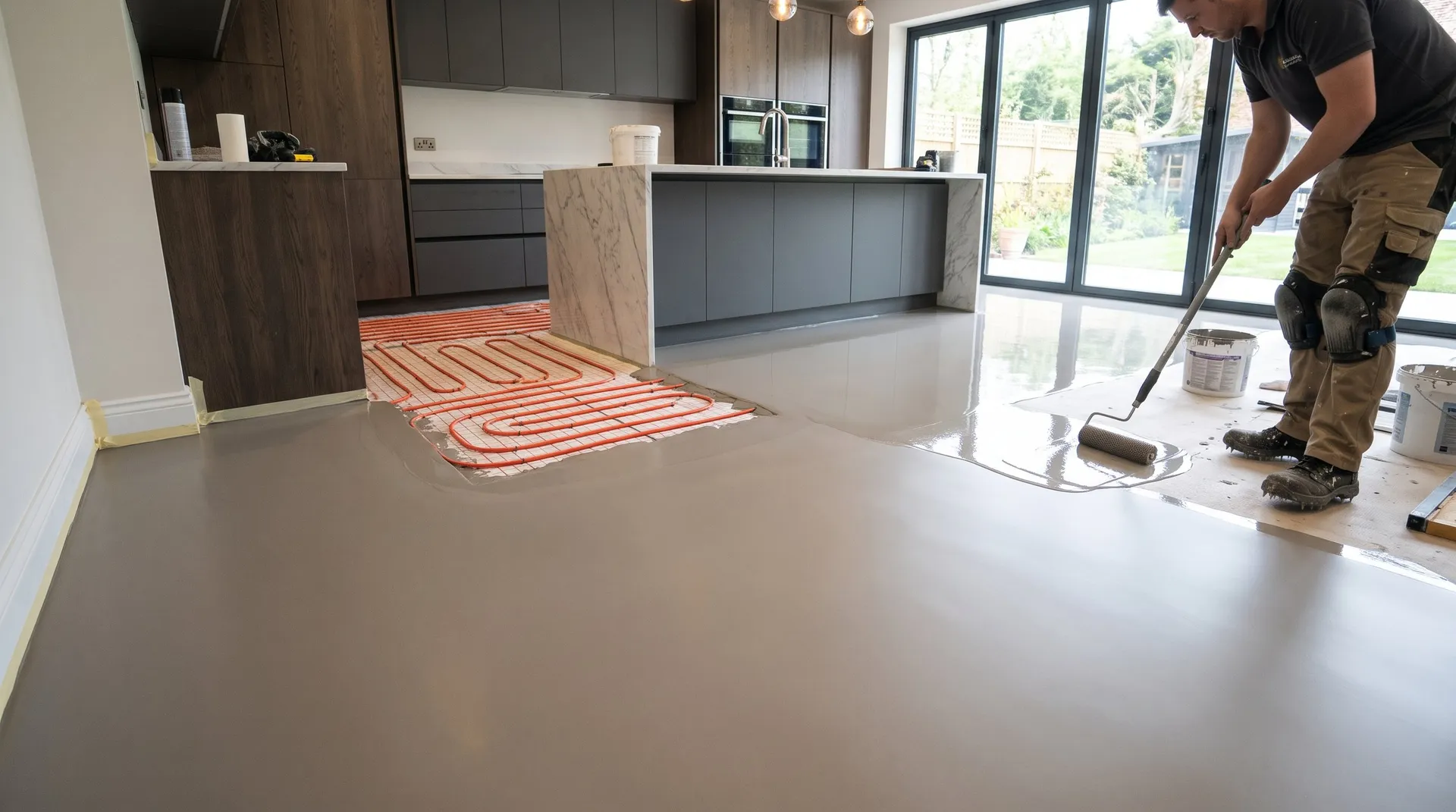
Seamless resin flooring
100% grout-free, hygienic and stain-resistant, in matte, satin or high-gloss, fully compatible with wet or electric underfloor heating.
Explore our services →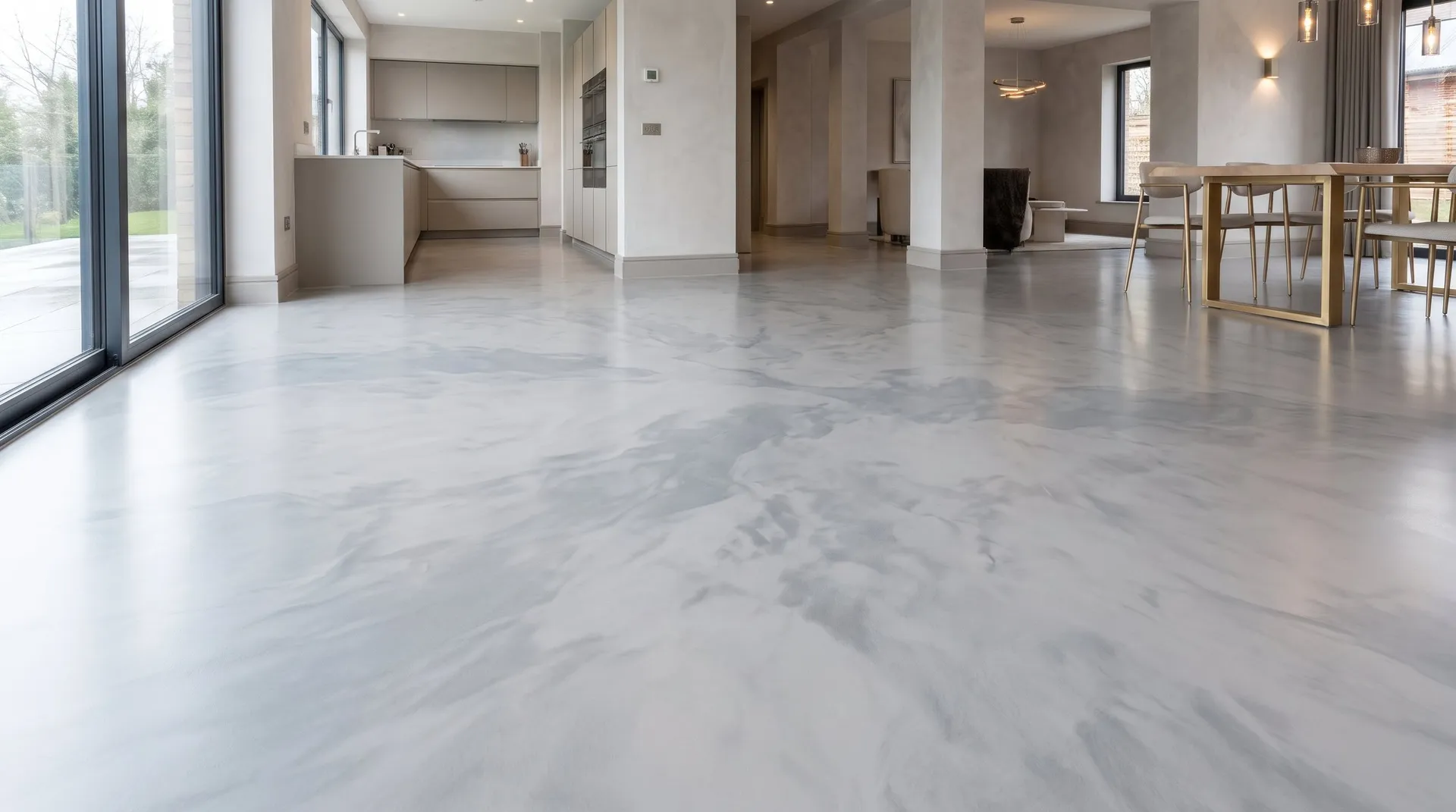
Seamless resin flooring across North Wales
We design and install seamless resin flooring, architectural microcement and liquid marble overlays for homes and businesses across North Wales — Colwyn Bay, Old Colwyn, Conwy, Llandudno, Wrexham, Bangor and the coast in between. From our Deeside base the journey is short, so we install here every week. Every floor is fully prepared, itemised in a fixed 30-day quote, and installed by our own qualified team.
100% grout-free, hygienic and stain-resistant, in matte, satin or high-gloss, fully compatible with wet or electric underfloor heating.
Explore our services →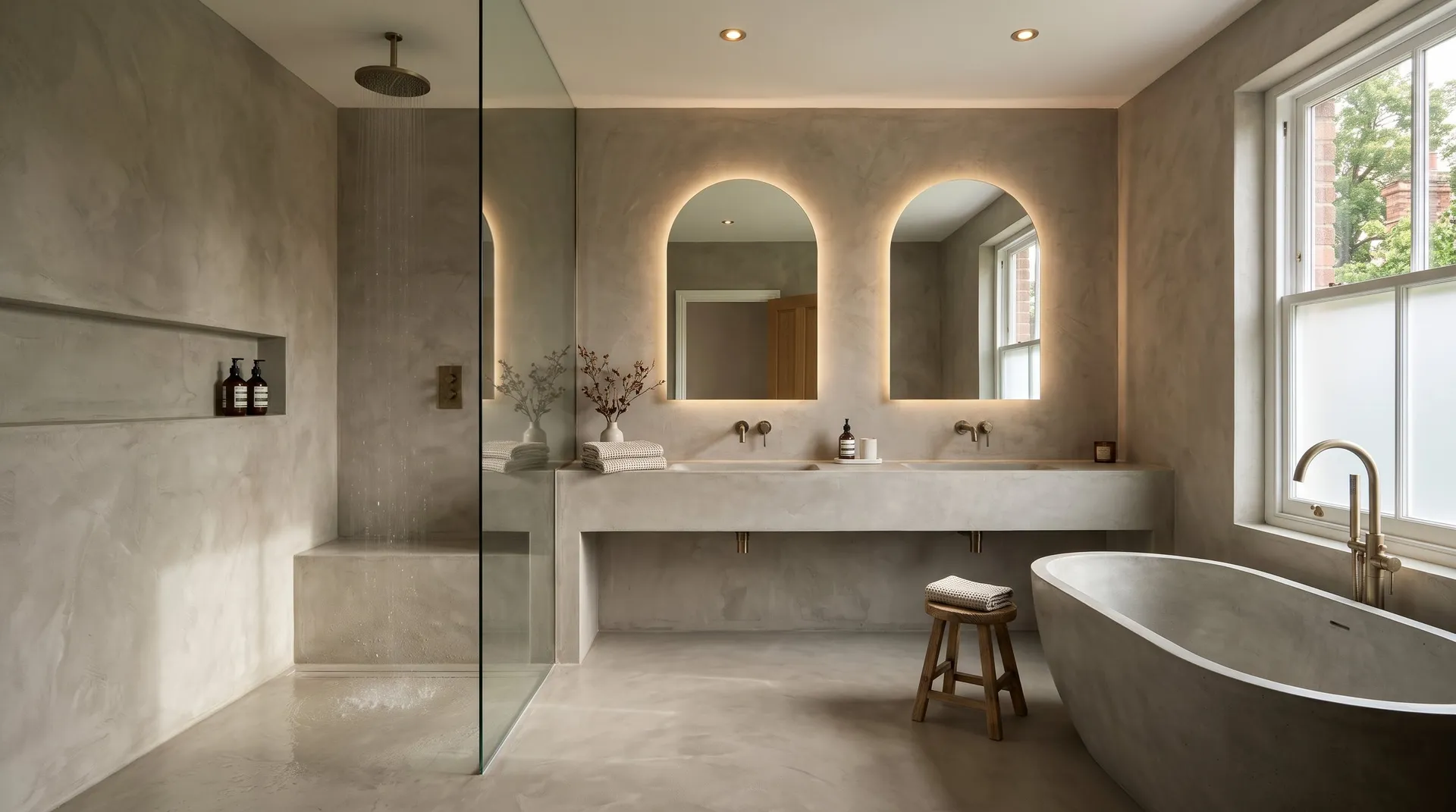
A hand-trowelled 2–3mm finish for floors and walls, ideal for coastal homes, minimal kitchens and continuous wet rooms.
Explore our services →
Hand-poured marble-effect floors, entryways and kitchen islands with unique veining.
Explore our services →
Ultra-durable, easy-clean systems for hospitality, retail and high-footfall spaces along the coast.
Explore our services →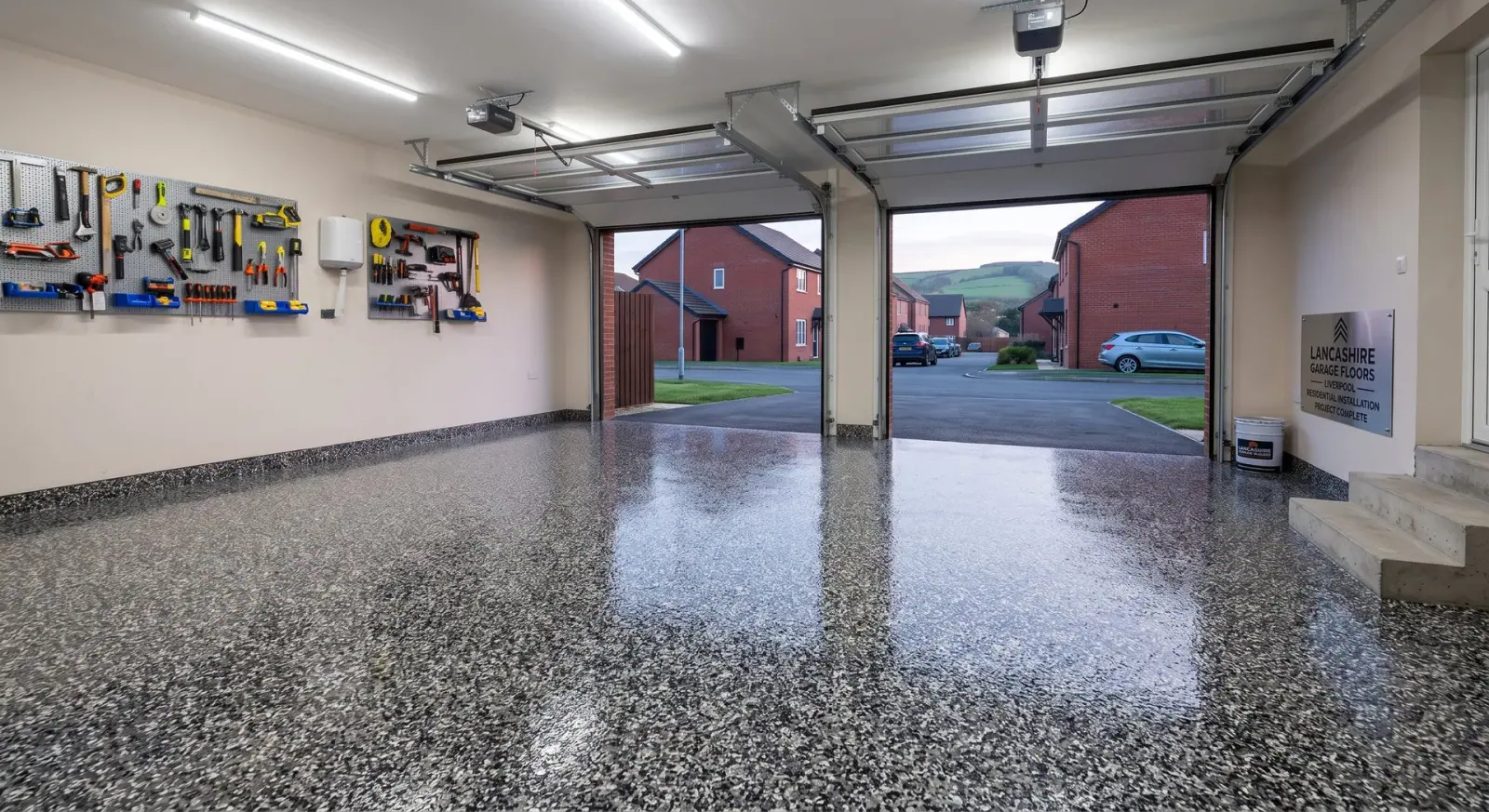
Durable coatings and moisture management for prestige garages and coastal properties.
Explore our services →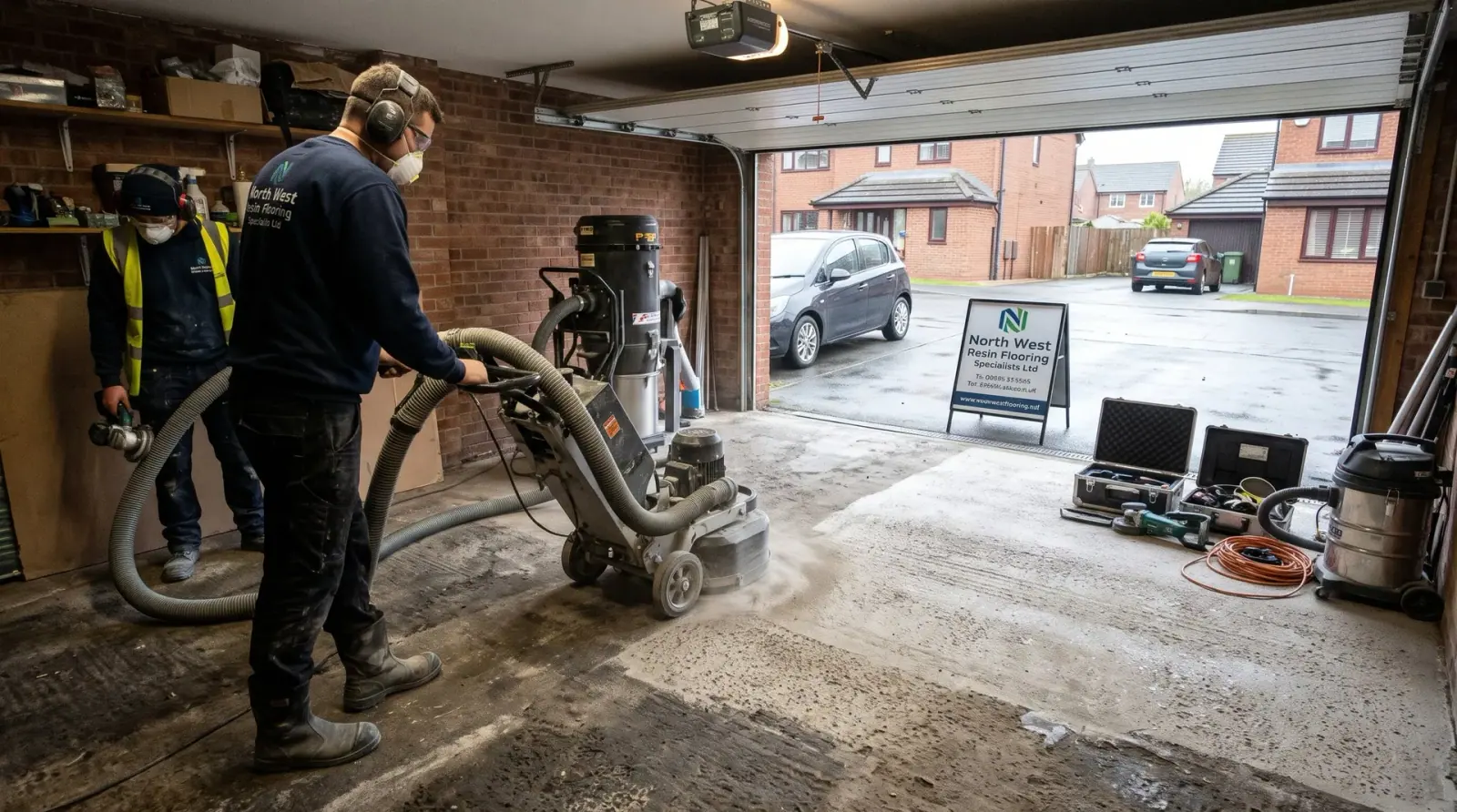
Diamond grinding with HEPA dust extraction, epoxy damp proof membranes and fibre-reinforced levelling screeds.
Explore our services →North Wales housing is different from the rest of our patch, and the floors show it.
The coastal towns – Colwyn Bay, Rhos-on-Sea, Llandudno, Prestatyn, Rhyl – have a lot of solid-walled Victorian and Edwardian property, plus a large amount of post-war and 1970s stock, and both come with floors that need thinking about before anything goes on them.
Coastal properties have the salt air problem. It is not dramatic, but it is relentless: higher ambient moisture, driving rain against exposed elevations, and often a lack of a modern damp proof course under an older ground floor. A resin or microcement floor over a slab that is quietly damp will blister, usually within the first couple of years and always in the same places. So on anything within a few streets of the sea we test moisture first and specify a damp proof membrane as part of the build-up rather than as an optional extra.
Inland is a different set of issues. Around Wrexham, Mold and the villages towards the border, the housing stock is more mixed and there is more new build. Newer screeds are usually flat and dry but need checking, and older rural properties often come with stone or quarry floors that have been covered over at some point. Those need the same treatment as anywhere else: find out what is underneath, test it, and then decide.
We are based in Deeside, which puts most of the North Wales coast well inside a normal working day. That matters more than it sounds: it means a survey can happen quickly, and it means if something needs revisiting we are not crossing the country to do it.
Where a floor is older, uneven, or needs the same finish running from floor to wall, microcement is often the better answer than resin.
Where the floor is competing with a view, keep it quiet. A seamless resin floor in a warm grey or pale concrete tone, matte or satin rather than gloss, lets the room do the talking. Gloss picks up every reflection off water and glass and starts to feel busy.
Older floors in these properties are rarely flat and almost never dry. This is often a microcement job rather than a resin one, because it is hand-trowelled and follows the movement of an older floor instead of fighting it, and it can run up the walls as well. Get the moisture management right underneath and it will last.
Hard-wearing, easy to clean between guests, and no grout to discolour. A seamless floor in a mid-tone hides sand and marks better than anything pale, and it takes a mop rather than a scrubbing brush.
Uneven, characterful floors that should stay characterful. Flagstones that are sound can sometimes be kept. Bitumen-covered or worn-through floors are usually better overlaid than restored, and microcement or a flake resin system both work here depending on the room.
Salt and damp are the enemies. A flake system with a moisture-managed build-up and a damp proof membrane is the standard answer, and it is worth doing properly the first time because recoating a failed garage floor costs more than the original job. More on garage flooring.
The continuous floor running through a kitchen, dining and living area is the most requested job we do in North Wales. Satin or matte, one colour, no transitions at the doorways.
North Wales has a commercial footprint built on tourism and the visitor economy, alongside light industry, agriculture and a lot of small independent businesses. The flooring needs are different in each.
Seamless, hygienic and washable in kitchens, cellars and back-of-house. Front-of-house needs a different specification, because glass and furniture gets dragged across it daily and a decorative coating that looks wonderful in a photo will mark in a season. We will tell you which system belongs in which room rather than selling one product throughout.
High turnover, hard use, and cleaning done by whoever is on shift. No grout is the whole argument here: there is nowhere for the dirt to sit and nothing to re-grout every few years.
Heavier-build systems, impact resistance, and honest advice about what a coating will and will not survive. Some agricultural environments need a different approach entirely, and we would rather say so than install something that fails.
Appearance and durability in roughly equal measure. Fast-cure systems where the business cannot afford to close for a week.
The practical reality of a coastal business is that there is a window in the winter when the work can happen. We programme around it and put the dates in writing, because a floor that overruns into half-term is a real problem.
For larger projects see commercial resin flooring, and for material supply or preparation carried out as part of a wider package see trade supply and subfloor preparation. Recent finishes are in our resin flooring portfolio.
Colwyn Bay, Old Colwyn, Conwy, Llandudno, Deganwy, Rhos-on-Sea, Wrexham, Bangor, Prestatyn, Rhyl, Abergele and villages along the North Wales coast — with Deeside and the Chester border villages covered too.
Trust A Trader vetted with £5M public liability and £10M employer’s liability insurance
30-day fixed itemised quotes with no hidden fees
Free site survey with physical sample boards before you commit
Typical installs of 2–4 days with dust-controlled preparation
We are in Deeside, not Manchester or Birmingham. The North Wales coast is inside our normal working area, with no travel surcharge bolted on to the quote.
Every coastal install gets moisture testing and a damp proof membrane where the readings call for it, because salt air and damp will find a way through an unprepared floor.
Diamond grinding with HEPA dust extraction, so a finished room in an occupied home does not end up covered in dust.
Physical sample boards brought to the survey, so you see the colour and sheen in your own light before committing.
Our own qualified installers, not subcontractors.
City & Guilds assured training in decorative epoxy surfacing, Ox Resin ProFlooring, completed February 2026.
Budgeting for your floor? Read our guide: Resin flooring cost per m² in the UK (2026 guide). Considering microcement? Read microcement bathrooms: cost, pros & cons, and whether microcement can go over tiles.
Also visiting: Cheshire · Liverpool & Merseyside · Greater Manchester
Yes — we cover Colwyn Bay, Old Colwyn, Conwy, Llandudno, Wrexham, Bangor and the whole North Wales coast, plus the border villages near Chester.
Our team works across the North West and North Wales every week. From our Deeside base, Colwyn Bay and the Conwy coast are a short journey, so we install there regularly with no travel surcharge.
Typically £60–£85 per m² for commercial-grade systems and £85–£120 per m² for bespoke metallic marble, + VAT, confirmed in a fixed itemised quote.
Yes — our seamless resin and microcement systems are fully compatible with wet and electric underfloor heating.
Yes. Coastal homes face salt air and moisture, so we pair every coastal install with diamond grinding, epoxy damp proof membranes and moisture management to stop blistering and peeling.
No. We are based in Deeside, and the North Wales coast including Colwyn Bay, Llandudno and Wrexham sits inside our normal working area. Travel is included in your quote, not added afterwards.
Both work when the substrate is properly managed, and the choice comes down to the look and the surfaces. Resin is typically the stronger option for floors that take vehicle traffic or heavy commercial use. Microcement is usually the better answer where you want the same finish running from floor to wall, or where the floor is older and uneven.
Often yes, but the moisture has to be managed rather than ignored. Where readings show a ground floor is holding moisture, we install an epoxy damp proof membrane across the slab before any decorative system goes down. That is what stops the floor blistering later.
Yes, and it is a common job for us on the coast. A typical domestic floor takes 2–4 days on site including preparation and curing, so it can usually be fitted between bookings if the calendar allows. Tell us your changeover dates at the survey and we will programme around them.
Our core area is the north coast, Wrexham and the Deeside and Chester borders. For Anglesey and the Snowdonia villages, send us your postcode and we will tell you honestly whether we can cover it properly rather than stretching ourselves thin.
More questions? Read our full FAQs.
Request a fixed itemised quote or send us your postcode to check coverage.
We use analytics cookies to understand how visitors use our site. They are only set if you accept. You can read more in our privacy policy.